The Milliman Mortgage Repurchase Index (MMRI) is a lifetime repurchase rate estimate calculated at the loan level for single-family mortgages within each quarterly origination vintage. MMRI defines the repurchase rate as the likelihood that a loan will ever be bought back by the seller from the secondary market agencies, Fannie Mae or Freddie Mac. The results of the 2025 Q3 study reflect the most recent acquisition data available from Fannie Mae and Freddie Mac, with measurement dates starting from October 1, 2023.
Key findings
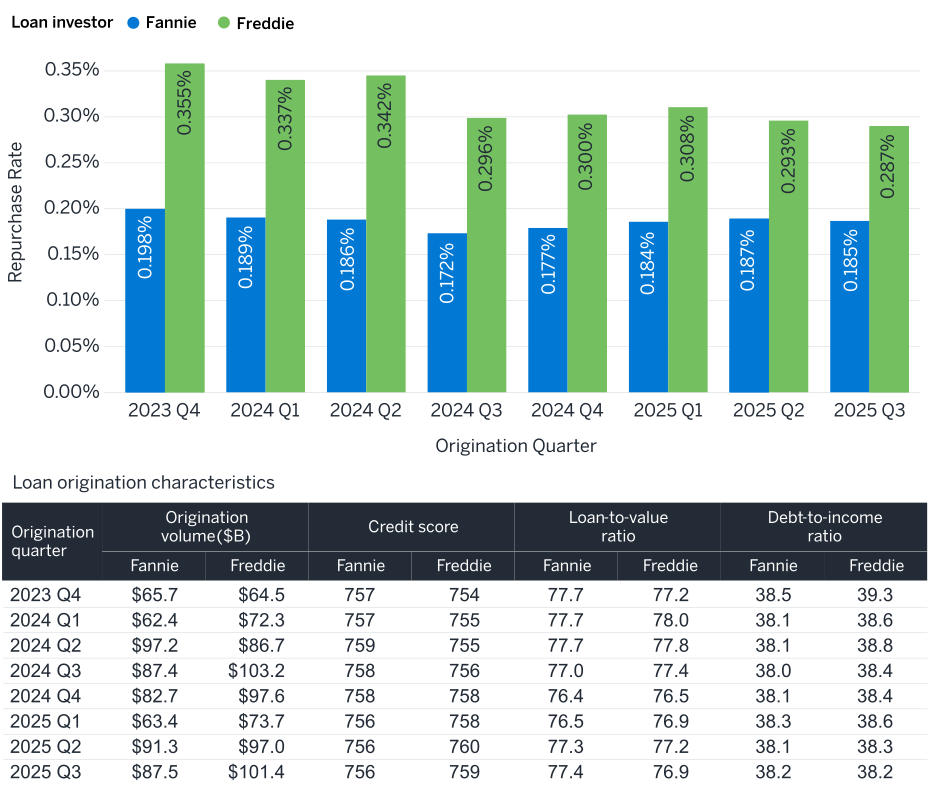
The value of the MMRI for government sponsored enterprise (GSE) acquisitions decreased slightly for Fannie Mae (from 0.187% to 0.185%) and for Freddie Mac (from 0.293% to 0.287%). The slight decrease of the modeled index is attributable to an uptick in appraisal waivers while underwriting characteristics remained stable. Please note the MMRI reflects Milliman’s proprietary model-based estimates and not actual mortgage repurchase results.
GSE repurchase demands continue to be driven by income-related defects. Meanwhile, the GSEs continue to release improved tools to help lenders improve underwriting quality.
Figure 1: MMRI 2025 Q3 dashboard for GSE loans
Summary of trends
For the 2025 Q3 origination cohort, our latest MMRI results indicate that repurchase risk has decreased marginally for both Fannie Mae (−0.2 bps) and Freddie Mac (−0.6 bps).
Freddie Mac published its quarterly defect report for 2025 Q3,1 detailing the top drivers of repurchase on a two-quarter lag. Top drivers of loan repurchase in 2025 Q3 were Income (35%) and Collateral (23%). Collateral trends have also been on Fannie Mae’s radar, with a recent Quality Insider report calling for the strengthening of the appraisal review process.2 Income defects represent impediments to properly calculating borrower debt-to-income (DTI), frequently cited in repurchase reports from Fannie Mae3 as a primary driver of repurchase activity.
Defects related to income are common since the GSE selling guides provide absolute requirements on allowable DTI ratios. If an underwriting defect is found and the loan then exceeds the guideline DTI threshold, a loan repurchase is triggered. Figure 2 breaks down the origination volume by DTI for existing loans by origination quarter.
Figure 2: Distribution of DTI by origination cohort ($UPB)
| Freddie Mac | Fannie Mae | |||||||
|---|---|---|---|---|---|---|---|---|
| [0,45) | [45,48) | [48,50) | [50,100] | [0,45) | [45,48) | [48,50) | [50,100] | |
| 2023 Q4 | 64.3% | 14.7% | 12.8% | 8.2% | 69.3% | 14.2% | 11.3% | 5.2% |
| 2024 Q1 | 67.6% | 14.1% | 11.7% | 6.6% | 70.8% | 13.6% | 10.5% | 5.1% |
| 2024 Q2 | 66.8% | 14.3% | 11.8% | 7.1% | 70.5% | 13.6% | 10.9% | 5.0% |
| 2024 Q3 | 69.0% | 14.0% | 11.1% | 5.9% | 71.3% | 13.5% | 10.4% | 4.7% |
| 2024 Q4 | 68.6% | 13.8% | 11.1% | 6.6% | 70.6% | 13.6% | 10.5% | 5.2% |
| 2025 Q1 | 67.6% | 14.2% | 11.5% | 6.7% | 69.8% | 13.9% | 11.0% | 5.4% |
| 2025 Q2 | 69.3% | 13.6% | 10.9% | 6.1% | 70.3% | 13.6% | 10.7% | 5.3% |
| 2025 Q3 | 70.0% | 13.5% | 10.7% | 5.8% | 70.5% | 13.7% | 10.8% | 5.1% |
Average DTI has held steady for both Freddie Mac and Fannie Mae in 2025 Q3 relative to 2025 Q2. The percentage of borrowers at or just below 50 is an important benchmark given that even a minor income defect can cause DTI to exceed the regulatory level and trigger a repurchase demand.
The reduction in tail share (48<=DTI) is likely due in part to reduced mortgage rates. From 2025 Q1, the prevailing 30-year mortgage rate dropped from 6.82% to 6.55% in 2025 Q3. Interest rates fell again in 2025 Q4, which would lower the average DTI ratio and, all else equal, reduce the risk of income-defect-related repurchase for lenders.
Figure 3: Average 30-year U.S. mortgage rates
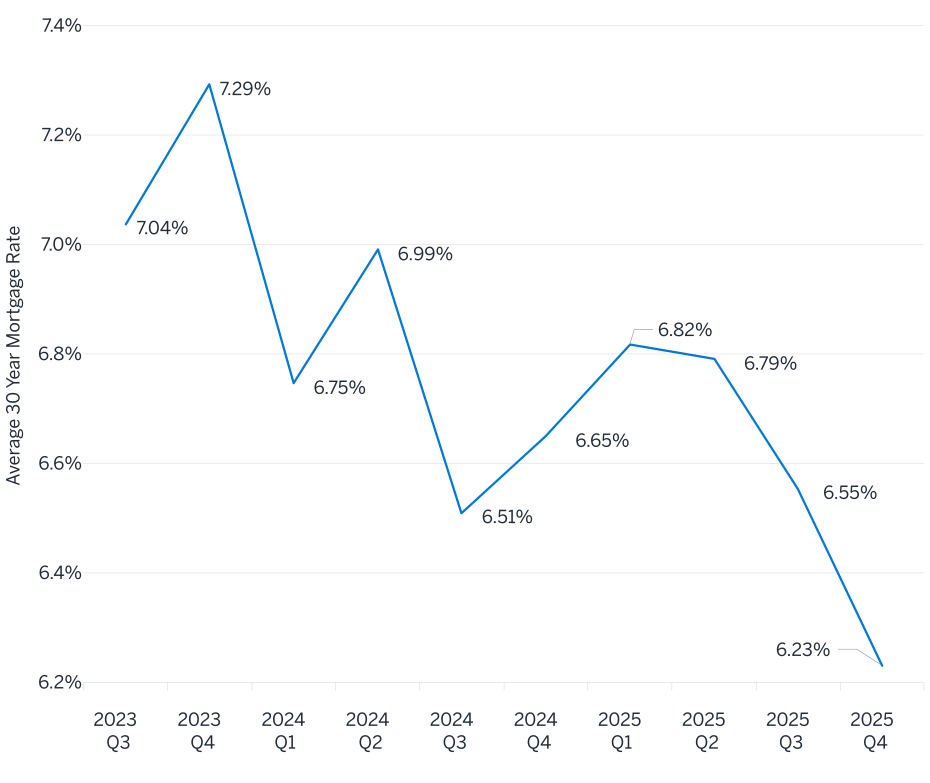
The latest press release from the Federal Reserve as of January 28th indicates that no further cuts to the federal funds rate are coming in February.4 Mortgage rates are influenced by various factors beyond short-term interest rates, including those that influence the strength of housing and MBS markets.
On January 8th, the White House directed the GSEs to purchase $200 billion in mortgage bonds.5 Increasing the demand for MBS lowers the yield and compresses the primary–secondary spread (the mortgage rate less the MBS yield), which lowers the average mortgage rate, all else equal. The total magnitude effect of this policy on interest rates will be a trend to monitor along with any emerging changes at the Federal Reserve.
The share of adjustable-rate mortgages (ARMs) as a proportion of all mortgage loans continues to increase for Fannie Mae while leveling off for Freddie Mac. Figure 4 shows the share of ARM acquisitions going back to 2012 Q1.
Figure 4: ARM volume as share of acquisition volume, 2012 Q1–2025 Q2
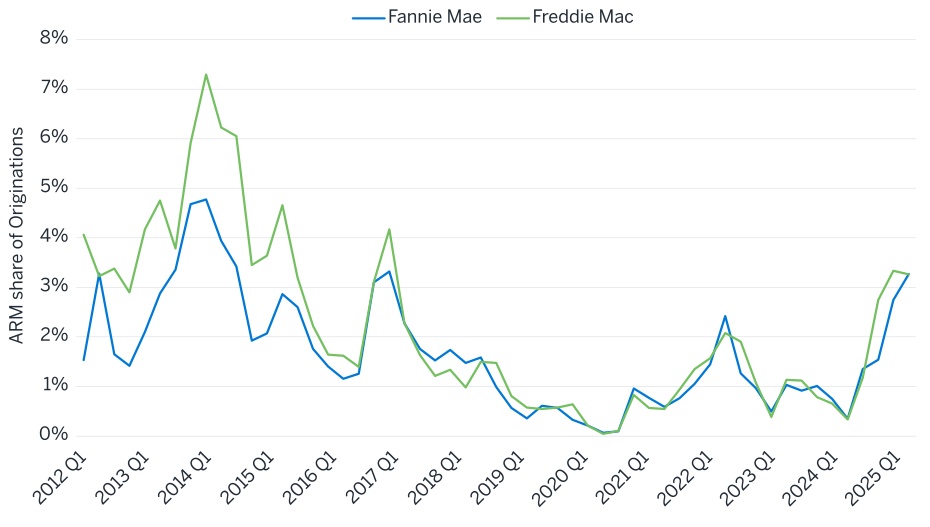
ARM share for Freddie Mac has steadily climbed to levels not seen since 2018. Per the Fannie Mae lending guide,6 DTI reporting on ARM loans is tied to the maximum interest rate the borrower could face within a time horizon defined by the terms of the ARM loan. This makes the repurchase risk outlook for ARM borrowers more sensitive to shifts in the mortgage rate.
Freddie Mac announced an expansion to the appraisal waiver program effective March 2025.7 This policy change increased the maximum LTV threshold from 80% to 90%, expanding access to the appraisal waiver program. This change was in lockstep with a similar policy shift from Fannie Mae announced in October 2024 and effective in March 2025.8 Figure 5 shows that the trend of increasing mortgage origination volume and the share of loans with appraisal waivers has continued from 2025 Q2 into 2025 Q3, relative to 2025 Q1.
Figure 5: Volume with an appraisal waiver by percentage of originations
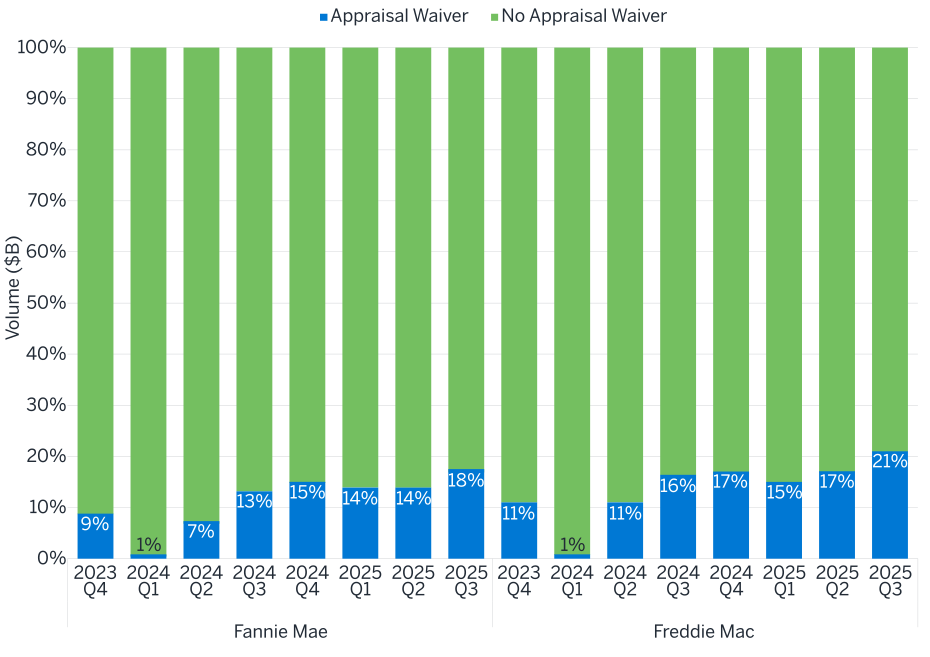
Loans need to qualify to receive an appraisal waiver based on more rigorous credit standards. As a result, repurchase rates on appraisal waivers tend to be lower relative to other property valuation methods. Given that the appraisal was waived, it is also not possible to have an appraisal related defect. All else equal, the volume with an appraisal waiver is expected to increase with the expanded eligibility standards. We will monitor if these loosened credit guidelines result in higher rates, which may, in turn, increase repurchase rates.
Both Fannie Mae and Freddie Mac have continued to work on developing tools to allow for streamlined quality control at mortgage underwrite. Fannie Mae recently announced additions to its Desktop Underwriter system to offer rep and warrant relief for defects related to undisclosed liabilities outside the mortgage payment.9 Freddie Mac has also released its Quality Control Advisor Plus platform to help automate traditionally error prone aspects of the underwriting process for lenders.10 Both programs could help reduce the cost and incidence of actual repurchase risk.
About the MMRI
Milliman is an expert in analyzing complex data and building transparent, intuitive, and informative econometric models. We have used our expertise to assist multiple clients in developing econometric models for evaluating mortgage risk, both at the point of sale and for seasoned mortgages.
The MMRI uses econometric modeling to develop a dynamic model that clients can apply in multiple ways. Because the MMRI produces a lifetime repurchase rate estimate at the loan level, clients use it as a benchmarking tool in loan defect pricing. The repurchase scoring methodology is constructed separately for repurchases that occurred while loans were either performing or delinquent. For new origination cohorts, Milliman applies these scoring methodologies and weights them using the probability the loan will roll into serious delinquency. In addition, Milliman uses a mix of borrower attributes and loan characteristics to identify trends most associated with loan repurchase.
Milliman is one of the largest independent consulting firms in the world and has pioneered strategies, tools, and solutions worldwide. We are recognized leaders in the markets we serve. Milliman insight reaches across global boundaries, offering specialized consulting services in mortgage banking, employee benefits, healthcare, life insurance and financial services, and property and casualty (P&C) insurance. Within these sectors, Milliman consultants serve a wide range of current and emerging markets. Clients know they can depend on us as industry experts, trusted advisers, and creative problem solvers.
Milliman's Mortgage Practice is dedicated to providing strategic, quantitative, and other consulting services to leading organizations in the mortgage banking industry. Past and current clients include many of the nation's largest banks, private mortgage guaranty insurers, financial guaranty insurers, institutional investors, and governmental organizations.
1 Freddie Mac. (2025). Freddie Mac loan delivery & repurchase trend reporting. Retrieved February 19, 2026, from https://sf.freddiemac.com/docs/pdf/loan-reporting-data-trends-q1-2025.pdf.
2 Quality Insider. (2025, December 18). Controlling for collateral defects. Fannie Mae. Retrieved February 19, 2026, from https://singlefamily.fanniemae.com/originating-underwriting/loan-quality/quality-insider/december-2025.
3 Quality Insider. (2025, September 30). Understand top defects to help strengthen loan quality. Fannie Mae. Retrieved February 19, 2026, from https://singlefamily.fanniemae.com/originating-underwriting/loan-quality/quality-insider/september-2025.
4 Board of Governors of the Federal Reserve System. (2026, January 28). Federal Reserve issues FOMC statement. [Press release]. The Federal Reserve. Retrieved February 19, 2026, from https://www.federalreserve.gov/newsevents/pressreleases/monetary20260128a.htm.
5 Boak, J. & Veiga, A. (2026, January 8). Trump says he wants government to buy $200B in mortgage bonds in a push to bring down mortgage rates. Associated Press. Retrieved February 19, 2026, from https://apnews.com/article/trump-housing-mortgage-rates-79294cf8eac1579b17430b4cd0708fcd.
6 Fannie Mae. (2025, August 6). Originating & Underwriting Selling Guide. B3-6-04, Qualifying payment requirements (02/07/2024). Retrieved on August 13, 2025, from https://selling-guide.fanniemae.com/sel/b3-6-04/qualifying-payment-requirements.
7 Freddie Mac Single Family. (2025, March 24). Loan Quality Advisor enhancement to support ACE and ACE+PDR expansion. Retrieved on August 13, 2025, from https://sf.freddiemac.com/articles/news/loan-quality-advisor-enhancement-to-support-ace-and-acepdr-expansion.
8 Fannie Mae. (2024, October 28). Fannie Mae announces changes to appraisal alternatives requirements [Press release]. Retrieved February 19, 2026, from https://www.fanniemae.com/newsroom/fannie-mae-news/fannie-mae-announces-changes-appraisal-alternatives-requirements.
9 Quality Insider. (2025, November 27). Enhancing efficiency: Undisclosed liabilities in Desktop Underwriter. Fannie Mae. Retrieved February 19, 2026, from https://singlefamily.fanniemae.com/originating-underwriting/loan-quality/quality-insider/november-2025.
10 National Mortgage Professional. (2025, November 19). Freddie Mac announces QC enhancement tool. Retrieved February 19, 2026, from https://nationalmortgageprofessional.com/news/freddie-mac-announces-qc-enhancement-tool.