Over the last several years, generative AI has matured from an emerging novelty to a key component of many enterprise workflows. Model families like ChatGPT, Gemini, and Claude have become cultural and industry mainstays, most visibly in software development, financial services, and digital content.
Now, transformative use cases in healthcare analytics have made the case for AI adoption incredibly strong. The question now facing organizations in the healthcare industry is no longer whether to adopt, but how.
Executive summary
Across every inch of the workflow, AI is redistributing where analytical effort is spent. That redistribution has allowed some organizations to condense the arduous work of collection and reconciliation and upcycle that time into more validation and analytical depth, while remaining within scope.
The old and the new
Figure 1: The balance of effort in pre-agentic and agentic workflows
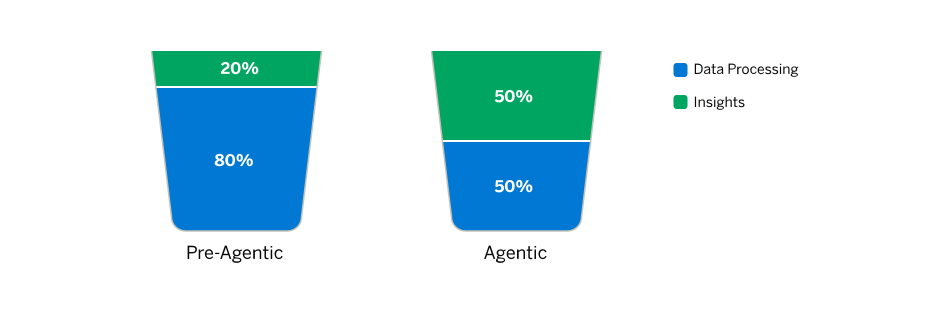
To demonstrate the split shown in Figure 1, Figure 2 outlines three common use cases, what they were, and how we have transformed them.
Figure 2: Three representative AI use cases
| Use case | Pre-Agentic | Agentic |
|---|---|---|
| Claims Data Profiling | Manual SQL, Excel, and SAS exploration | Agent-driven data staging and quality profiling |
| Regulatory Document Synthesis | Repeated effort reading massive documents | Automatic indexing and summarization of hard-to-grasp topics |
| Pharmacy Formulary Analysis | Manual PDF extractions, National Drug Code (NDC) lookups, and contract comparisons | Agents extract structured data from PDFs and reconcile against client contracts |
Introduction
Healthcare analysts do not lack data. In fact, there is more data available than one can readily use. Much of it remains unused—as Dell’s Beth Andrews put it, “97% of the data today in healthcare is not used … because it’s difficult to wrangle.”2 Data are often fragmented across organizations and difficult to link across systems, and the resources to support effective interoperability are often lacking or dated.
Working with structured data is challenging enough, but modern workflows increasingly must grapple with unstructured data sources as well. Regulatory manuals, clinical notes, and call-center transcripts are all sources of truth an analyst can be called upon to utilize. The volume, variety, and fragmentation of the information required to work with healthcare data have never been greater, and it would be unrealistic to expect that tide to subside.
This paper outlines emerging AI tools that improve one’s ability to stay on schedule and on budget and to engage with data in a whole new way.
A new form of automation
The tools available today go far beyond online search, email drafting, and meeting note generation. Agentic AI brings a new form of automation to the table capable of tackling tasks requiring applied judgment and nondeterminism at scale. AI enables us to automate complex, nonlinear workflows that were previously intractable and inflexible.
AI is continuously improving at navigating ambiguity, finding paths through the weeds, and adapting to changing variables.
Implemented with appropriate governance, the AI tools available today provide the infrastructure to successfully manage, complete, and improve the work an analyst can do in any given time frame. Instead of 80% of the budget allocated to extract, transform, load (ETL) work and 20% to insights, AI pushes that relationship closer to even—not for every actuarial or analytical task, but increasingly for the semi-structured, recurring work that consumes so much of an average week.
AI snapshot
Figure 3: Accuracy over time for flagship AI models
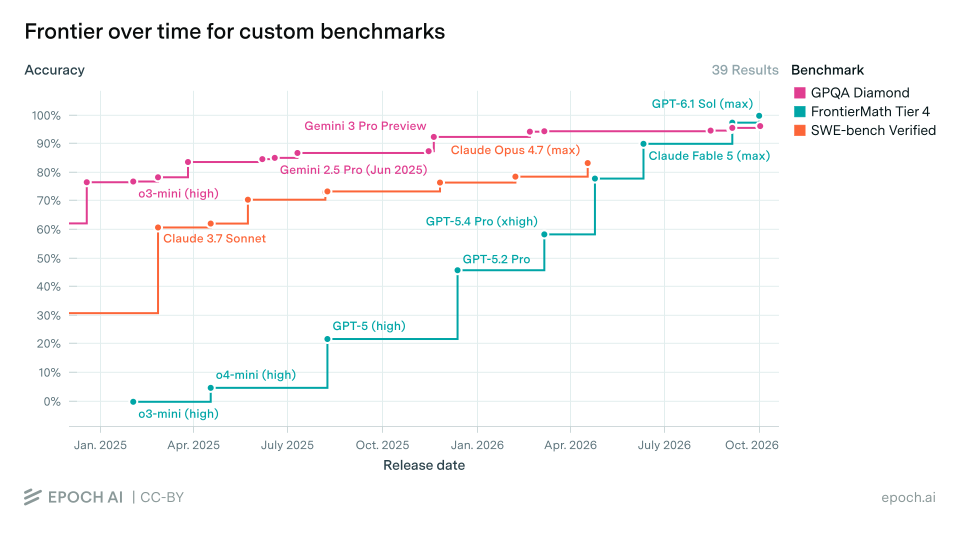
Source: Epoch AI (n.d.). AI Benchmarking Hub – GPQA Diamond, SWE-Bench Verified, and FrontierMath Tier 4. Retrieved September 14, 2026, from https://epoch.ai/benchmarks.
The tools underpinning the redistribution of effort in healthcare analytics workflows are not static. Flagship AI models' accuracy on professional-grade tasks has improved dramatically over the last 18 months. Between early 2025 and mid-2026, on Epoch AI benchmarks, leading models improved by 22 percentage points (61% to 83%) in software engineering proficiency, 98 percentage points (0% to 98%) in graduate-level mathematics, and 18 percentage points (77% to 95%) in scientific reasoning.
These gains in model performance are increasingly relevant for healthcare analysis and actuarial work: synthesizing large volumes of information, tracing patterns across data, and producing accurate, data-driven conclusions.
The capabilities available today are tangibly stronger than those available a year ago and will be stronger still a year from now.
An AI adoption experience
In late 2024, our team within Milliman saw this technological shift on the horizon and was faced with a choice: either wait for someone else to discover how to leverage AI or invest the time and energy to discover it for ourselves. We opted to embrace change and engage in the messy experimentation required to discover the winning patterns within this new technological landscape.
In the initial stages of this transformation, AI adoption among our team looked like what we imagine adoption looks like at many organizations today. We had disparate licenses across an array of AI products, a handful of GitHub Copilot seats, and immature tools providing fine-enough insights.
There was curiosity, but without clear tooling and best practices, users struggled to get started. Outside of power users and developers, general adoption remained below 20%. Our group was navigating through trial-and-error and individual initiative rather than a coordinated strategy.
In 2026, this changed substantially. The group has developed Orbit, a mediated AI workbench purpose-built for our workforce. Orbit provides each employee with a curated set of performant AI capabilities accessible on their machine, built on top of Visual Studio Code (VS Code), Microsoft's open-source development environment, reconfigured to work not just for software development but across the full range of analytical, consulting, and administrative tasks.
This elevates every analyst's and actuary's ability to produce their best work at a scale fit for the intelligence age.
What makes Orbit more performant for us than just opening a chatbot or using GitHub Copilot out of the box is the layered architecture customized for the group's workflows. The architecture rests on five composable, vendor-neutral layers, with GitHub Copilot Chat as the mediating surface.
Figure 4: Orbit’s layered architecture
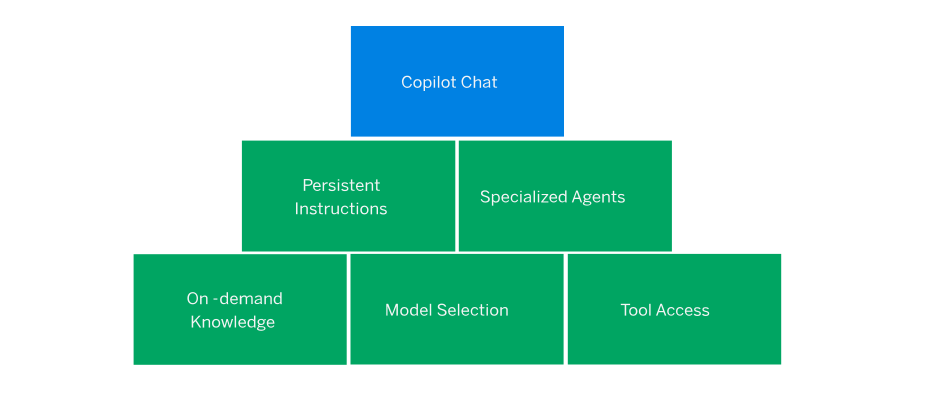
Figure 5: Orbit’s layers, functions, and examples
| Layer | Function | Example |
|---|---|---|
| Persistent Instructions | Encode firm standards, rules, and guardrails | Enterprise integration guidelines |
| Specialized Agents | Direct focused agents at specialized tasks | A claims profiling agent versus a regulatory synthesis agent |
| On-demand Knowledge | Load expertise when a relevant task is detected | Medicare bid rules, formulary classification logic, client-specific parameters |
| Model Selection | Match reasoning and cost to task complexity | Fast models for formatting; deep-reasoning models for analysis |
| Tool Access | Connect to databases and references | SQL queries, PDF indexing, reference APIs |
Through the construction of specific implementations using these building blocks, the AI agents aiding analysts and actuaries are elevated from an antiquated chatbot to a highly performant and personalized system operating within the boundaries and standards of the group.
The adoption numbers reflect the utility of this setup. As of April 2026:
- Orbit has 74.6% sustained engagement across consultants, analysts, and software developers.
- Orbit powers ~11 chat sessions per person per working day, a significant volume of vetted output daily.
We have moved beyond the pilot stage to consistent use for real day-to-day work. This allows for greater adaptation to changing client needs, enhanced deliverables, and careful analytical work.
Use cases in healthcare analytics
The following three use cases represent generalized versions of workflows we used to redistribute how we spent our time for a client engagement. The workflows outlined here allowed us to engage more critically with project data, adapt more quickly to changing requirements, and provide a greater degree of expert human insight.
Use case 1: Claims data profiling
Claims data comprise much of the universe actuaries and analysts inhabit daily. Pharmacy, medical, and dental claims files can expand to millions of records with inconsistent formatting across suppliers—CSV, SAS datasets, delimited flat files—all requiring reconciliation before any downstream work begins. Field distributions must be examined, nulls identified, duplicates reconciled, and values validated. This work is neither optional nor deterministic; no single script can replicate it wholesale. It is the foundation on which all downstream analysis is built, yet it is not where an analyst provides the meat of their value.
While complex, the workflow follows a similar pattern each time. After receiving claims documents, what follows is SQL-, Excel-, or SAS-driven exploration: queries, pivot tables, and cross-referencing that can take hours before actual analysis begins. Much of this work is mechanical and rote, though not easily codified in programmatic scripts. The queries are variations on themes that have been written and tested many times before, just maybe not in exactly the way needed this time.
Using the building blocks outlined in Figures 4 and 5, we built a system centered on an AI agent with two core capabilities: a conversational interface to the firm's consolidated claims database and an in-memory analytical engine that ingests local CSV, Excel, and SAS files. Read-only queries, conservative type inference, and mandatory verification at each step keep the work controlled, all while maintaining strict protocols for data privacy and security. When tasked with profiling data and computing costs by service category, the agent stages data into structured schemas, samples for quality, computes distributions, flags anomalies, joins against enrollment for member months, and produces a structured summary, while also giving us insight into each step of the process.
Use case 2: Regulatory document synthesis
Regulatory document synthesis can be incredibly time-consuming. Centers for Medicare and Medicaid Services (CMS) bid instructions, rate announcements, benefit notices, and proposed rules can each run hundreds of pages and often arrive in clusters. For someone preparing a Medicare Advantage bid, it's a requirement to understand every part of these documents before focusing on the work the client needs done.
We built an agent specializing in document ingestion and semantic retrieval. It can call tools to index large PDFs and Word documents into a local searchable source, turning monolithic files into retrievable layers and managing context window limitations effectively. For documents that fit within context, the agent ingests them in full and produces structured summaries organized by topic. Parsing a file and its predecessors for changes to payment methodology, benefit categories, submission timelines, and compliance provisions becomes a single query.
This workflow, and AI augmentation in the reading process, does not replace a staff member's reading of guidance and documentation; that remains essential for anyone putting their name on a filing. What it provides is a detailed, accurate first pass that focuses attention and builds the baseline understanding. What remains is the context curation and critical thinking required to evaluate the strategic and operational implications of those regulations.
Use case 3: Pharmacy formulary analysis
Pharmacy benefit work sits at the intersection of clinical, financial, and regulatory analysis—and all of it arrives in messy, uncooperative sources. Formulary files come as PDFs; pharmacy benefit manager (PBM) proposals land as multi-tab spreadsheets with inconsistent schemas; drug classification systems and NDCs live in specialized reference sources requiring manual lookup. The processes required to reconcile and extract the relevant information from these files consume a disproportionate amount of focus and budget compared to the value they add.
To ameliorate this, we connected three capabilities through the building blocks described previously. First, document conversion transforms PDF formularies into structured tabular data, extracting drug names, NDCs, tier placements, and coverage restrictions cleanly, a process that copying and pasting regularly mangles. Second, pharmaceutical reference data access lets the agent look up NDCs, retrieve pricing benchmarks, and classify drugs through natural language. Third, the same in-memory analytical engine used in claims profiling joins, compares, and reconciles the data without the manual transformations usually required between steps.
This allows an analyst to hand off a PDF formulary and contract summary to the agent and receive a structured, detailed comparison much earlier in a project’s life cycle than previously. From there, the actual depth of understanding can run much deeper, and the work ahead can be done with even more guiding context than previously.
Looking ahead
Everything described in this paper is a snapshot of what is achievable today. The aid provided by AI models to healthcare analytics and actuarial workflows is not a static gain, but something that will continue to improve and grow. Model capabilities improve measurably with each release cycle, and the agentic workflows built on top of them benefit directly without requiring significant reworking.
Human-first versus agent-first workflows
- Human-first: An analyst performs each step manually, using AI as a local assistant. Gains are linear and tied to individual interactions.
- Agent-first: The system is built around AI performing structured work while the analyst orchestrates, validates, and exercises judgment. Gains compound with every model improvement.
While we are reformatting where the effort lies in client engagement today with a human-first approach, eventually the latter approach will open new doors never previously considered.
Beyond model improvements, the surrounding infrastructure is reaching a level of maturity. Multi-agent orchestration, where specialized agents coordinate across a full workflow rather than operating in isolation, represents the near-term evolution.
Open-source developments have already demonstrated AI configurations capable of writing to their own memory, assigning tasks, and sourcing skills autonomously, transforming agents from reactive to proactive collaborators. In healthcare analytics, workflows where a data profiling agent hands structured output to a deliverable assembly agent while a regulatory agent concurrently verifies compliance citations are already emerging.
Adaptation and discernment are where value is derived, and that’s where the hard work should go. Why lose hours and effort to the routine when it can instead be dedicated to the insights that matter?
Conclusion
Healthcare analysts and actuaries work daily with extraordinary data volumes requiring deep domain knowledge to parse, reconcile, and act on, all while navigating regulatory complexity, imperfect data, and exacting professional standards. AI and agentic workflows, as they exist today, are mature enough to meaningfully augment the structured, recurring, and labor-intensive segments of that work. It does not replace professional discretion but instead helps ensure it is applied where it matters most. Through careful configuration, firm-specific governance, and commercially available platforms, the workflows outlined in each use case are achievable today.
As with any significant technological shift, risks exist at both ends of the adoption spectrum. Organizations that adopt without sufficient governance expose themselves to quality and compliance issues, while those that defer entirely risk falling behind. This paper represents a measured position between the two: a practical and replicable shift in how effort is distributed across workflows within an engagement. The models, the open-source frameworks, and the configuration patterns needed for implementation are all accessible right now. The promise of meaningful AI business transformation is within reach.
1 Karma, R. (2026, May 1). So, about that AI bubble. The Atlantic. Retrieved October 14, 2026, from https://www.theatlantic.com/economy/2026/05/ai-bubble-revenue-anthropic/687022/.
2 Plescia, M. (October 30, 2023). Health exec: 97% of healthcare data isn't used. MedCity News. Retrieved October 14, 2026, from https://medcitynews.com/2023/10/health-exec-97-of-healthcare-data-isnt-used/.