As an alternative to traditional fee-for-service (FFS) Medicare, Medicare Advantage (MA) is a government-sponsored program in which benefits are provided to Medicare beneficiaries by private health plans, otherwise known as Medicare Advantage organizations (MAOs). MAOs offer plan designs that cover all services provided under traditional Medicare plus varying benefits and premiums. MA plans are required to offer benefits at least as rich as those covered under FFS Medicare, but they frequently include additional supplemental benefits not available under FFS. For dual-eligible special needs plans (D-SNPs), these can take the form of benefits supplemental to FFS (e.g., dental, vision, and hearing) and less often, reduced cost sharing on Medicare-covered benefits or reductions in the Part B premium through buydowns. MAOs receive government subsidies to cover traditional Medicare Part A and B services and can offer supplemental benefits supported by savings generated through care management. Because MA is a managed care program, it differs from traditional FFS Medicare in several respects, including the use of contracted provider networks and prior authorizations.
The Milliman MACVAT® is a tool designed to analyze MA plan benefit offerings and is widely used by industry stakeholders to provide a robust and actuarially grounded assessment of MA competitive positioning, plan designs, and strategy. Each MA plan’s benefit offerings and premium are evaluated to create an associated value added—Milliman’s proprietary measurement of plan value. This white paper highlights changes in value added and key benefit trends in the MA market from 2025 to 2026. This discussion focuses on D-SNPs (plans which target beneficiaries who are dually eligible for both Medicare and Medicaid). A separate white paper discussing general enrollment plans can be found here.
Average value added of D-SNP MA plans decreased substantially from 2025 to 2026
Figure 1 shows the average annual change in value added (total, Part C, and Part D) from 2023 to 2026. It also shows the components of value added, which are benefit value (estimated cost of Part C and Part D benefits to the plan) and member premium (Part B buydown and C plus D premium) from 2023 to 2026.
Total value added measures the value of benefits provided to a specific plan’s beneficiaries beyond traditional FFS Medicare, which is not funded through member premiums. Market-wide averages in value added measures are calculated on a member-weighted basis. Value added is robust, since it accounts for the value of non-Medicare-covered benefits, buydown of the Part B premium, and any additional member premium associated with an MA plan. It includes measurements of both the level of cost sharing and any limitations plans put on utilization or cost (such as benefit-specific maximums the plan will fund).
Figure 1: Average value added and benefit value PMPM growth/decline for D-SNP MA plans in the last four years
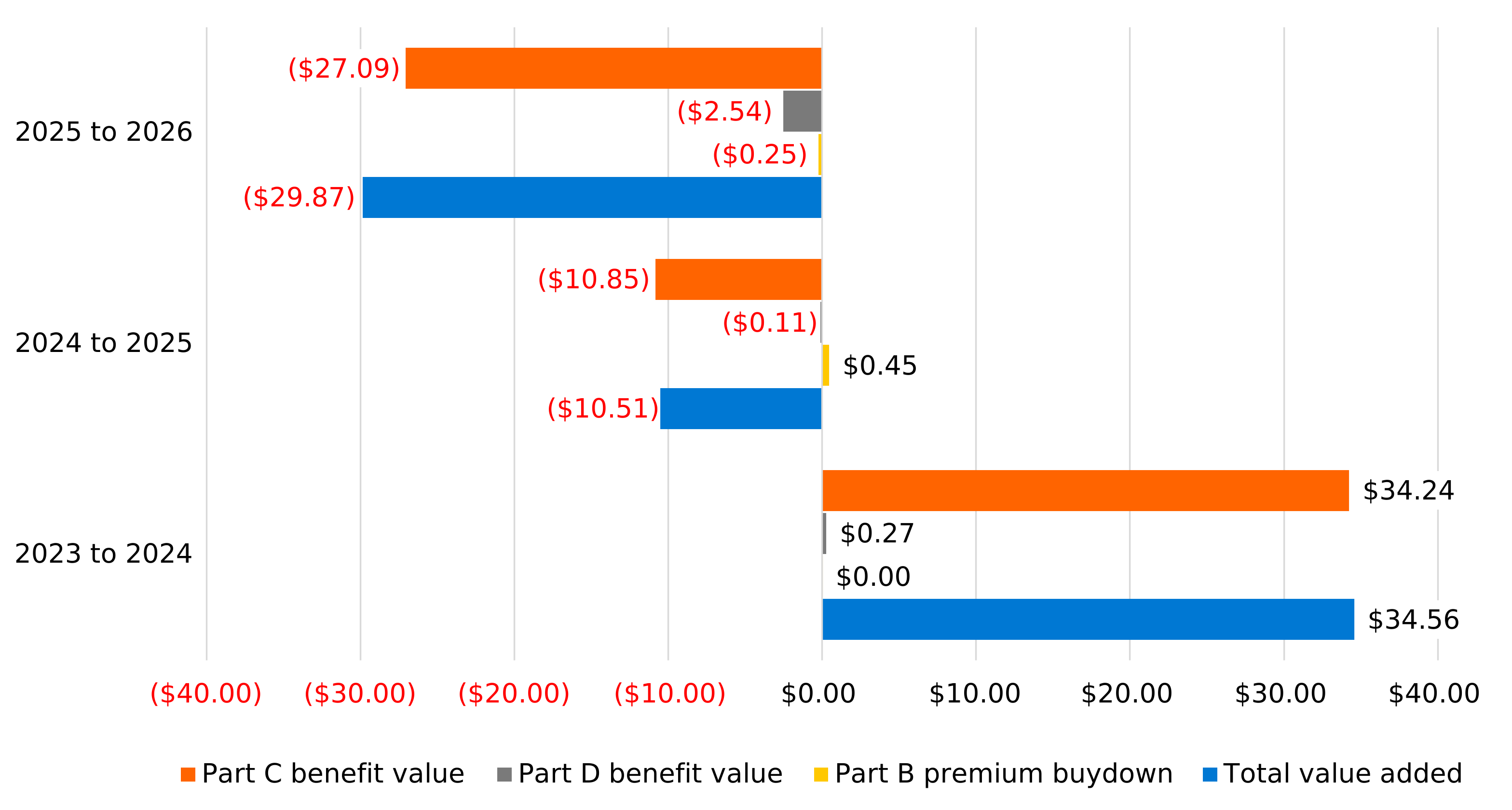
Decline in D-SNP value added continued in 2026. From 2025 to 2026, total value added declined by approximately $30 per member per month (PMPM), following a decrease of about $11 PMPM from 2024 to 2025. This marks the second consecutive year of declining value added after a period of strong growth, including an increase of approximately $35 PMPM from 2023 to 2024. Notably, the magnitude of the 2026 decline exceeded that of the prior year and further extended the market’s shift away from the elevated benefit increases observed in 2024.
The termination of the VBID model was the primary driver of the 2026 reduction. The Centers for Medicare and Medicaid Services (CMS) previously announced the VBID model would conclude after the 2025 plan year, which prompted a market-wide transition in benefit structures for 2026. Nonuniform benefit value declined by approximately $26 PMPM from 2025 to 2026 and accounted for nearly the entire decrease in Part C value added. In prior years, the VBID model allowed plans to broadly target dual-eligible members using socioeconomic criteria (i.e., low-income) and to offer flexible, cash-like benefits, such as grocery and utility assistance. Because D-SNP plans are designed for members with access to both Medicare and Medicaid due to income requirements, and Medicaid eligibility is based (in part) on income and asset criteria, nearly all members enrolled in D-SNP plans qualified for VBID benefits under the VBID model. With the conclusion of the VBID model after 2025, plans transitioned primarily to special supplemental benefits for the chronically ill (SSBCI) and uniform flexibility (UF) offerings in 2026. However, because SSBCI benefits are generally tied to specific chronic conditions or qualifying criteria, fewer members are expected to qualify relative to VBID’s broader eligibility framework, resulting in lower aggregate nonuniform benefit value.
In addition to the contraction in nonuniform benefits, several traditional supplemental benefit categories experienced modest reductions in richness of offerings from 2025 to 2026, including dental, vision, and over-the-counter (OTC) benefit cards. At the same time, combined (combo) benefit offerings increased, partially offsetting some of the broader supplemental pullbacks. Overall, the reduction in medical supplemental benefits accounted for nearly the entire decline in Part C value added.
The end of VBID had major implications for Part D benefit design. Under VBID, many plans offered reduced or $0 cost sharing on Part D drugs. With the conclusion of the VBID model after 2025, carriers pivoted toward enhanced alternative (EA) designs, which bought down cost sharing only on certain tiers. This drives a modest Part D value added decline from 2025 to 2026. A more detailed discussion of Part D trends and drivers follows.
Although average benefit value declined, MAOs increased D-SNP plan offerings on a net basis from 2025 to 2026. The total number of D-SNP plan offerings in 2026 increased by approximately 10% relative to 2025, in contrast to non-SNP plans, which decreased by roughly 9% over the same period. Most national carriers expanded D-SNP offerings in 2026, and several also increased chronic special needs plan (C-SNP) offerings. This divergence suggests continued strategic emphasis on serving higher-acuity populations, even as benefit structures have been recalibrated.2
Figure 2: Prevalence of members covered by a VBID or SSBCI package and certain benefit flexibilities for D-SNPs under these benefit flexibilities in the last four years
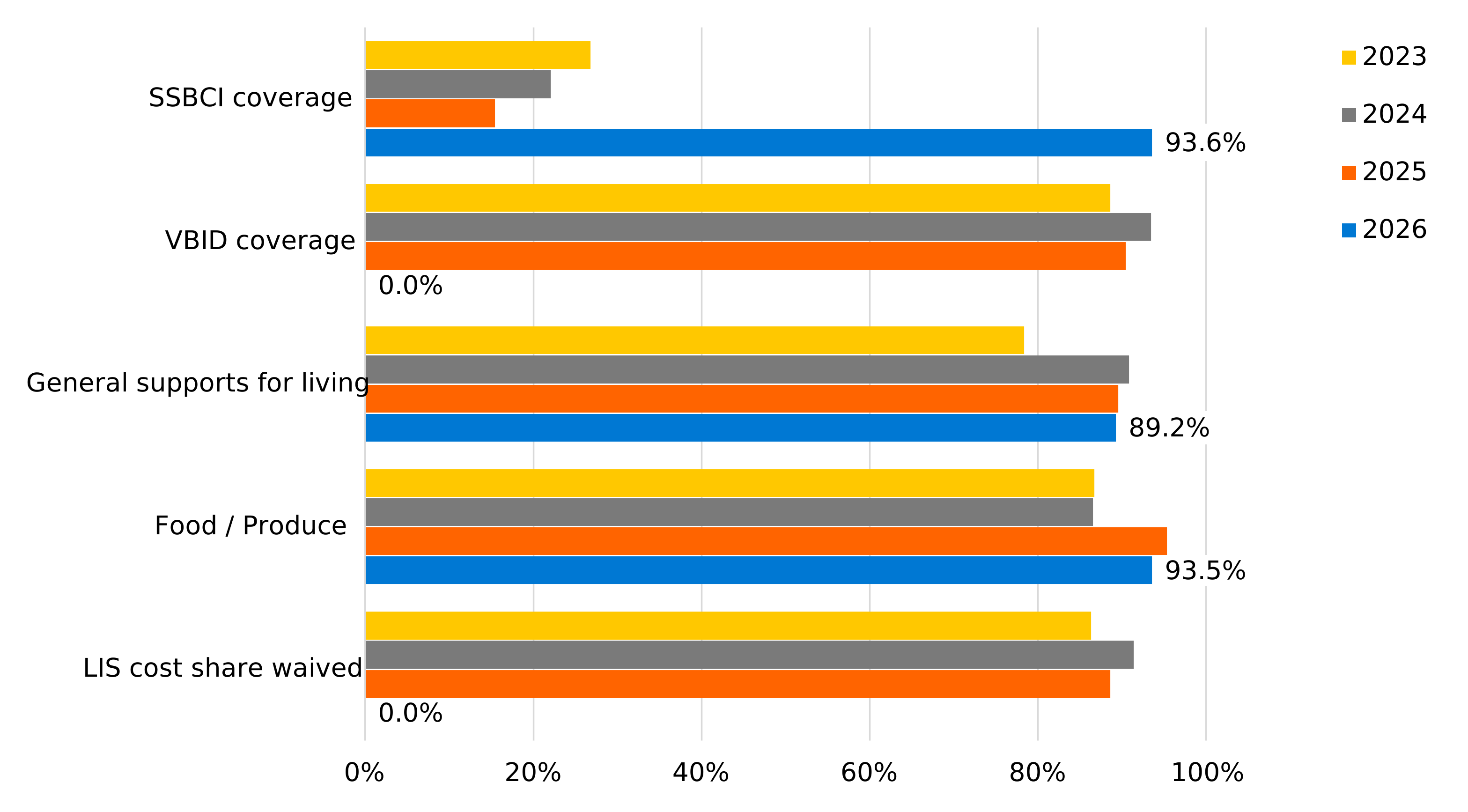
As shown in Figure 2, the termination of the VBID model resulted in a structural shift in nonuniform benefit offerings from 2025 to 2026. In 2025, approximately 90% of D-SNP members were enrolled in plans offering VBID benefits, while only 15% of members were enrolled in plans with SSBCI coverage. With the termination of VBID, the prevalence of SSBCI benefits increased to approximately 90%, consistent with the percentage of 2025 members enrolled in plans with VBID.
Despite this shift, the prevalence of key benefit categories, such as food/produce and general supports for living, remained high in 2026. However, because SSBCI benefits are generally tied to specific chronic conditions or qualifying criteria, eligibility is narrower than under VBID’s broader socioeconomic targeting framework. Although more than 90% of D-SNP members are in a plan with SSBCI, not all those members are going to be eligible for those specific benefits as they would have under VBID. As a result, even with similar coverage levels for certain benefit categories, the aggregate nonuniform benefit value declined materially in 2026.
Part D benefit value contracts as D-SNP plans transition from LIS cost share waived VBID benefits to EA designs with $0 cost sharing and deductible exclusion on generics. Depending on dual-eligible status and income relative to the federal poverty limit (FPL), members who qualify for low-income cost sharing subsidies generally do not pay the full Part D cost sharing amount offered by the plan. Instead, members pay fixed copay amounts for brand and generic drugs until the member’s MOOP is met. These fixed copays apply to Low-Income Subsidy (LIS) members regardless of their plan unless the plan uniformly offers cost sharing on certain tiers to all members. For dual-eligible members below 100% of the FPL (i.e., the majority of D-SNP enrollees), the patient pay amounts were $1.60 and $4.90 for generic and brand scripts in 2025, respectively. The difference between the plan’s uniform cost sharing (e.g., 25% coinsurance) and the patient pay amount is paid to the plan as the low-income cost sharing subsidy.
Beginning in 2021, plans were allowed to buydown the fixed patient pay amounts for low-income members through a VBID benefit and still receive low-income cost sharing subsidies, which allowed many low-income members to essentially pay nothing for their Part D drugs regardless of formulary tier. This arrangement has since become a core benefit in the D-SNP market and a key offering for plans’ competitive positioning, with nearly 90% of D-SNP members having this benefit in 2025 (see Figure 2).
With this benefit no longer allowed in 2026, Figure 3 shows how plans have pivoted from defined standard (DS) benefit designs with VBID in 2025 to EA designs with supplemental coverage of $0 cost sharing on certain tiers in 2026. All else equal, this approach costs more to plans because they do not receive any low-income cost sharing subsidies when uniform cost sharing is bought down to $0, which explains why most D-SNP plans only offer $0 cost sharing on less expensive tiers (i.e., generics) and not brand or specialty tiers. While it is likely that many D-SNP plans are now offering $0 EA benefits to remain competitive and avoid member disruption, many D-SNP plans need to offer supplemental coverage that would offset negative basic coverages and achieve a positive total Part D premium, as we discuss later in this paper.
Figure 3: Prevalence of members in 2026 with $0 cost sharing and deductible exclusion for certain tiers on D-SNP MA plans
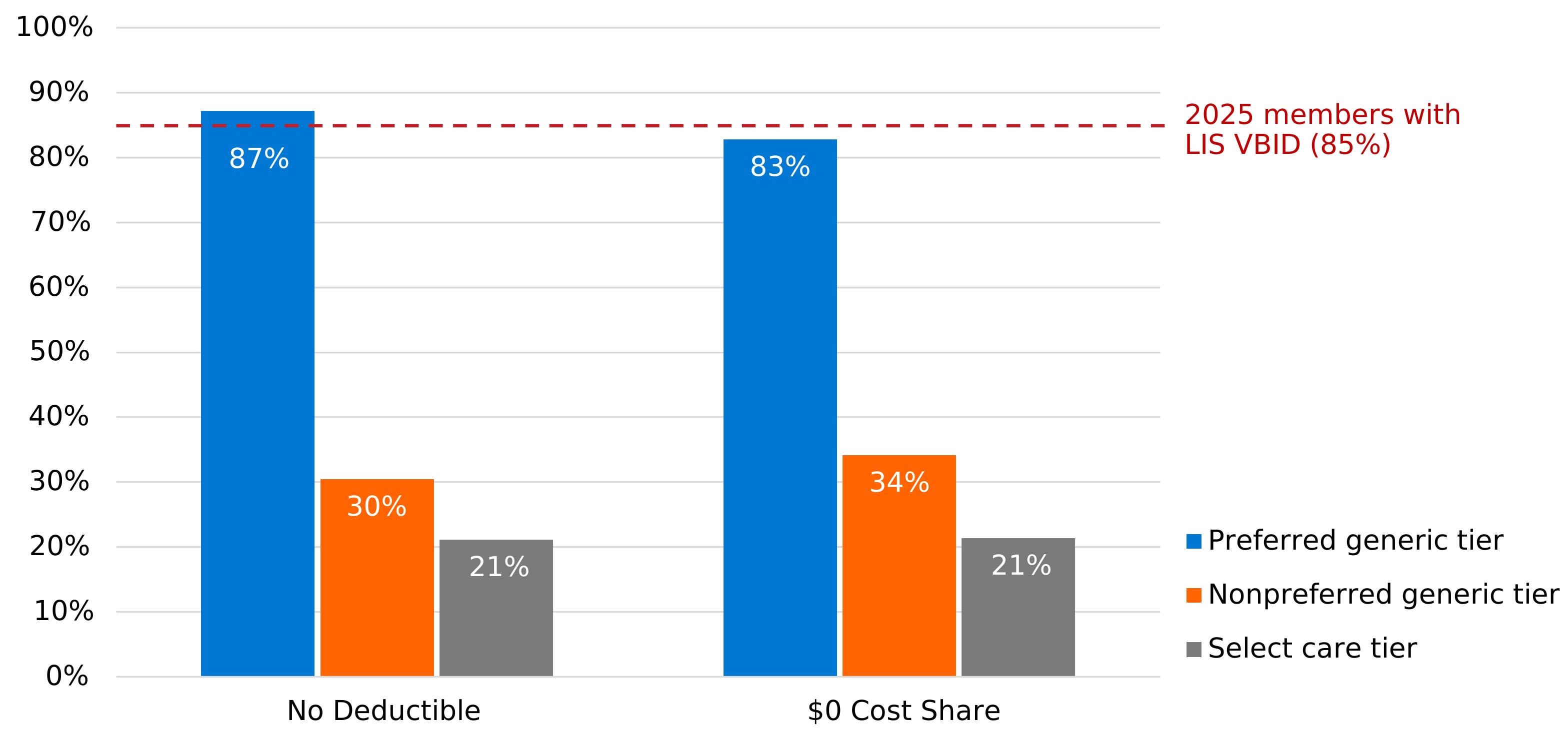
The majority of 2026 D-SNP members are enrolled in plans that offer no deductible (87%) and $0 cost sharing (83%) on the preferred generic tier in 2026, which is consistent with the 2025 enrollment in plans with LIS VBID represented by the dotted line in Figure 3. With LIS VBID in 2025, representing 85% of enrollment, LIS members would not pay a Part D deductible or have any cost sharing across all drug tiers, including brand and specialty drugs. A smaller portion of 2026 enrollment belongs to plans that extend $0 coverage to their nonpreferred generic tier (33%) and select care tiers (20%). Only a small portion of D-SNPs bought down cost sharing on brand tiers because most plans offer coinsurance at or near the 25% DS benefit and apply to the deductible. While this supplemental coverage may cost more to the plan compared to the VBID benefit, it inherently provides less value to the member because most VBID benefits would span across all tiers, therefore driving the decreased Part D benefit value, as shown in Figure 1.
Figure 4: Average value added change in key uniformly offered supplemental benefits from 2025 to 2026
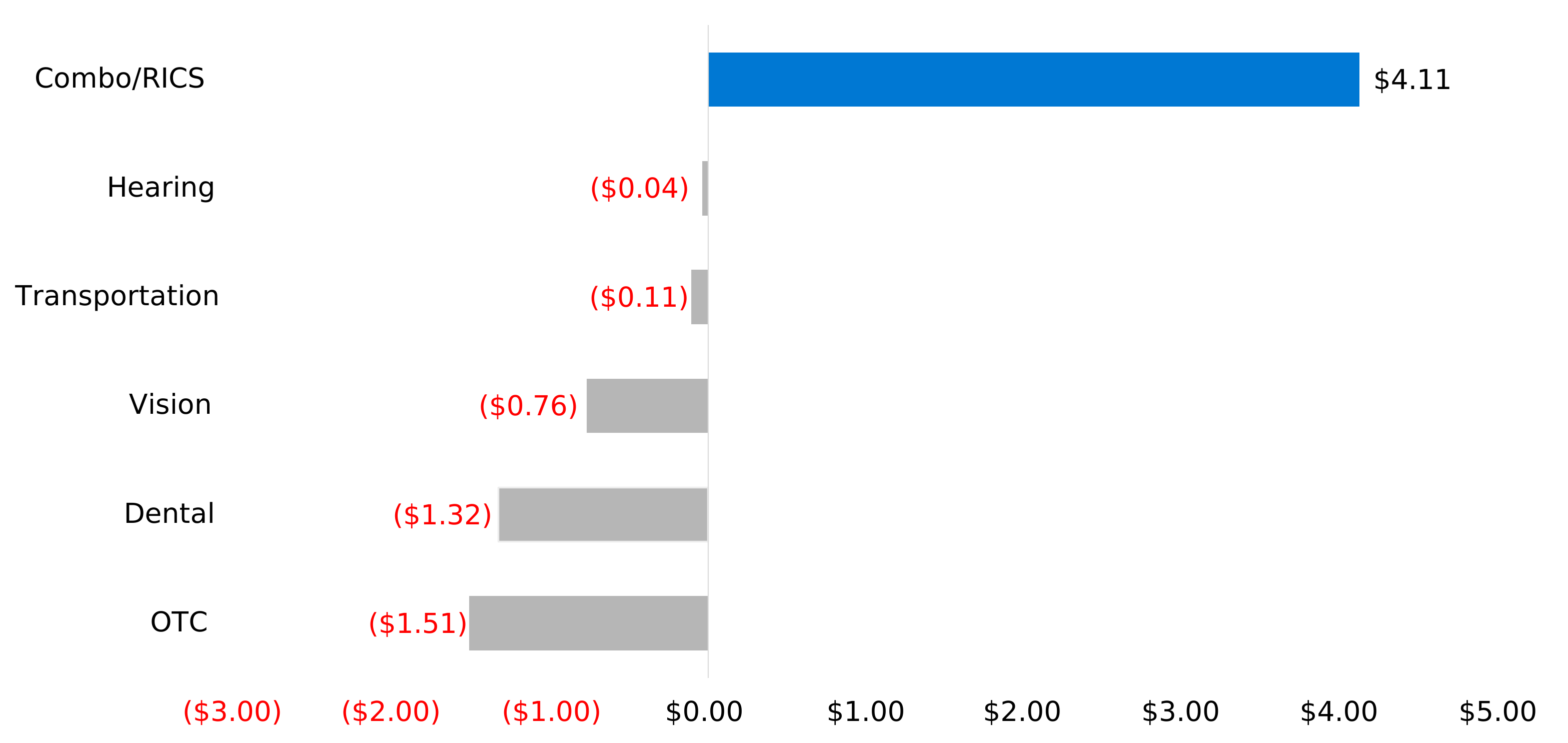
D-SNPs pulled back on key uniformly offered supplemental benefits in 2026. D-SNP plans frequently offer supplemental benefits beyond those covered under traditional FFS Medicare. This discussion focuses on mandatory supplemental benefits and excludes optional supplemental benefits, for which members elect coverage and pay an additional premium.
As shown in Figure 4, the estimated value of several core uniformly offered supplemental benefits declined from 2025 to 2026. Reductions were most evident in dental, vision, and OTC benefits, with smaller decreases observed in transportation and hearing. This marks a second consecutive year of decline following several years of growth in supplemental benefit value.
These changes occur amid heightened financial and operational pressures in the MA market, prompting greater discipline in product design and benefit positioning. Within this environment, supplemental benefit changes serve as a key lever for managing overall plan value and sustainability.
The observed reductions reflect a combination of modest shifts in benefit prevalence and limits. Under certain benefits, the percentage of members with coverage declined slightly from 2025 to 2026, and some benefit limits were reduced or restructured.
In contrast, combo/Reduction in Cost-Sharing (RICS) benefit value, which allows for multiple services to be offered under a single shared limit, increased from 2025 to 2026. The increase in the value of combo/RICS benefits and the decrease in stand-alone benefits may indicate that plans are restructuring their benefit offerings on D-SNP plans to allow for greater flexibility in how members spend their benefit dollars.
Figure 5: Distribution of Part C benefit value components from 2025 to 2026
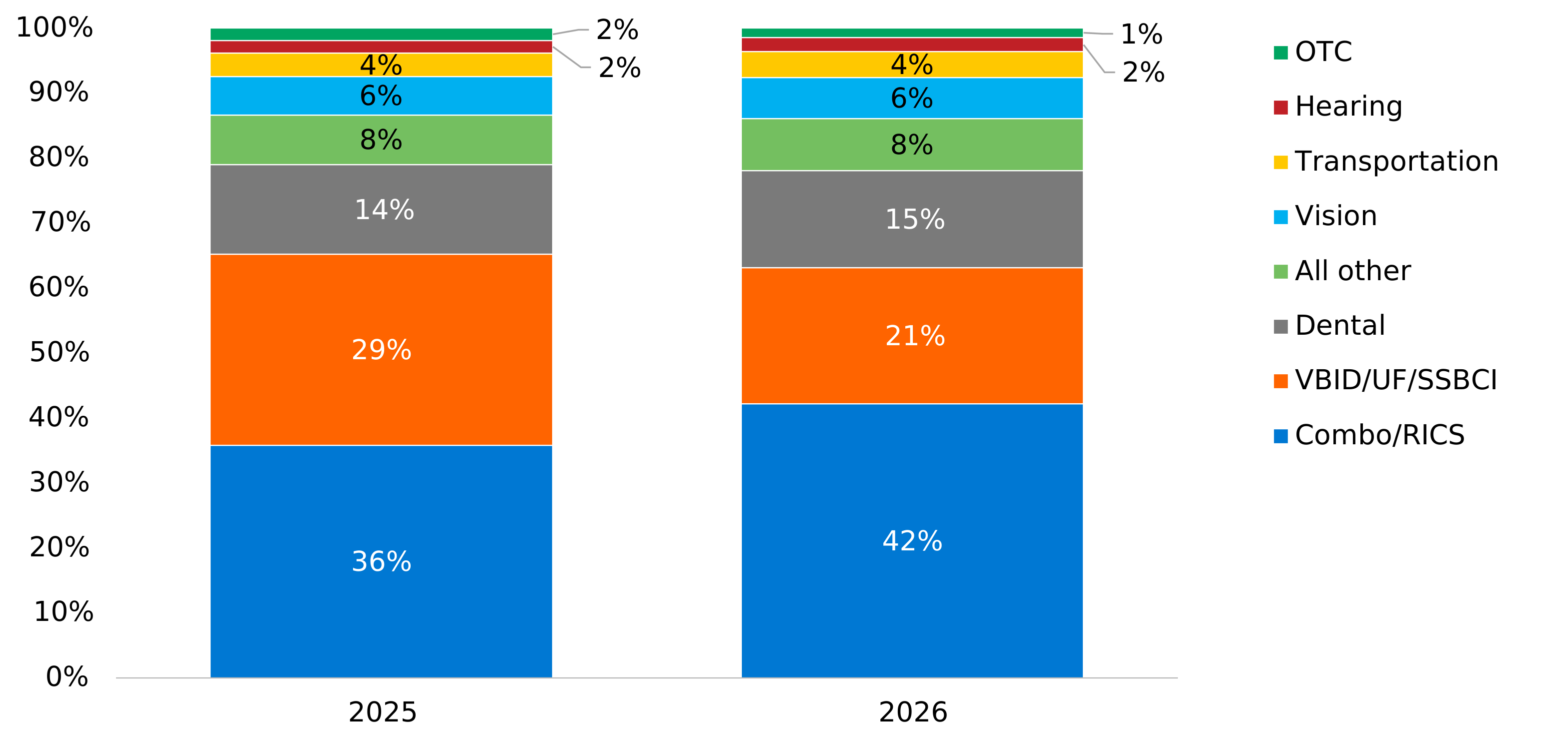
Although total Part C benefit value declined materially from 2025 to 2026, the composition of that value also shifted across benefit categories. As shown in Figure 5, combo benefit offerings increased as a share of total Part C benefit value from 36% in 2025 to 42% in 2026. In contrast, benefits offered under VBID, UF, or SSBCI declined as a share of Part C benefit value, decreasing from 29% to 21% following the termination of VBID. Dental benefits, as a proportion of total Part C benefit value, were relatively stable, while smaller categories, including vision, transportation, hearing, and OTC benefits, kept a consistent share.
Most supplemental benefit categories experienced year-over-year reductions in benefit values PMPM. Nonuniform benefit value declined by approximately $26 PMPM (the largest driver in Part C benefit value reduction), while combo/RICS benefit value increased by approximately $4 PMPM. As total Part C benefit value decreased from 2025 to 2026, several categories maintained similar proportional shares despite lower absolute dollar amounts. The termination of VBID itself may have influenced the magnitude of benefit changes made on uniform benefits.
These changes suggest that the 2026 decline in benefit value reflects a structural recalibration of supplemental offerings rather than a full retreat from supplemental benefits. The termination of VBID reduced plans’ ability to broadly deploy flexible, cash-like supports across the D-SNP population, resulting in narrower targeting and lower aggregate benefit value. The higher concentration of combo/RICS benefits indicates that plans perceive members as continuing to prioritize flexibility of benefit utilization.
Part D dynamics on D-SNP plans drastically change in 2026
Substantial changes were made to the Part D market in 2026, with the introduction of new dynamics that impacted plan and member types differently. Many of these dynamics introduced tailwinds to D-SNP plans. In particular, the 2026 RxHCC model generated unfavorable risk score changes for non-low-income members, and the non-low-income population also saw highly elevated brand and specialty utilization trend.3,4 These changes contributed to the nearly $60 increase in direct subsidy. In contrast, D-SNP plans (which are excluded from the direct subsidy calculation) saw relatively favorable risk score changes for low-income members and generally did not experience the same levels of trend, so these plans on the whole benefited from the increased direct subsidy amount in 2026. Favorable revenue changes among the low-income population (especially the prescription drug plan low-income population) also drove notable decreases to regional LIPSAs in 2026, which is generally equal to the total member premium target in the D-SNP bid submissions—resulting in a $0 actual premium for the member because they are not responsible for any premium at or lower than LIPSA.
Due to favorable revenue changes, 278 (or 33%) EA D-SNP plans reported negative basic premium amounts per CMS 2026 landscape file. Part D premiums consist of a basic premium (covering the DS benefit) and a supplemental premium (covering any enhancements beyond the DS benefit). In total, Part D premiums (basic + supplemental) must be greater than or equal to zero, which required plans to offer supplemental Part D coverage with a supplemental premium that at least offset any negative basic premium amount. This requirement is a likely driver behind some of the EA benefit changes discussed earlier, especially for D-SNP plans who extended supplemental coverage beyond generic tiers. Figure 6 below demonstrates the distribution of the post-buydown Part D basic and supplemental premiums for D-SNP plans with EA Part D designs nationwide.
Figure 6: Distribution of D-SNP EA plans basic and supplemental Part D premium in 2026
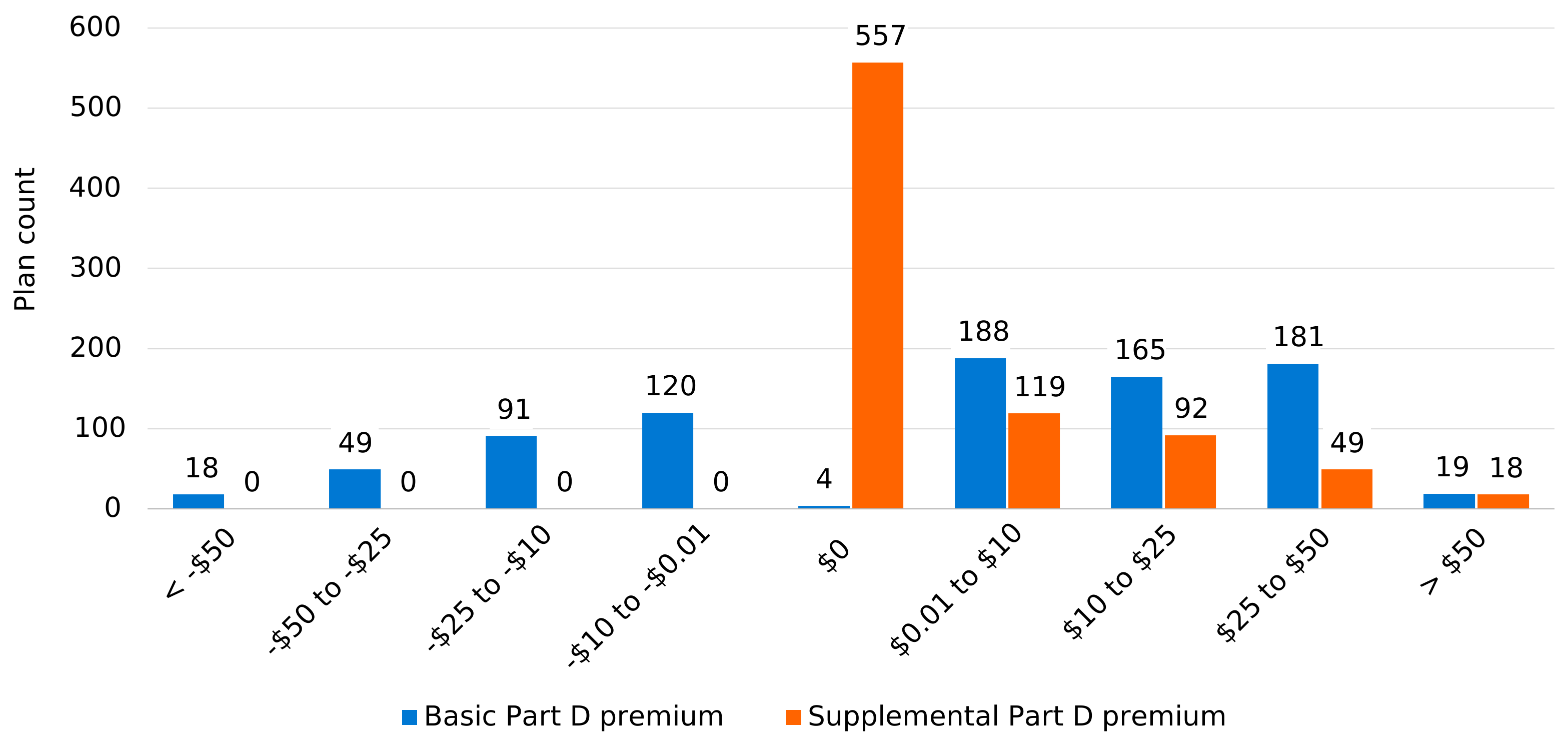
The majority (557 or 67%) of these plans that had a $0 post-buydown supplemental premium also had a $0 or greater basic premium, which is common for D-SNP plans when targeting a total Part D premium equal to the LIPSA and only possible if the pre-buydown basic premium was non-negative. The distribution of plans with greater than $0 post-buydown supplemental premiums align with the distribution of plans with negative basic premiums, or in other words, total Part D premiums on D-SNPs offsets to $0 when basic premiums are negative. Plans with positive basic premiums and $0 supplemental premiums would be subsidized by the LIPSA, with both situations still resulting in no premiums being charged to members.
Data sources and methodology
To perform these analyses, we relied on detailed information on MA benefits, premiums, and enrollment as released by CMS. Enrollment used to calculate weighted averages is from February of each year.
The estimated value of the Part C and Part D benefits is evaluated using Milliman’s internal pricing models, including the 2026 Milliman Medicare Advantage Competitive Value Added Tool (Milliman MACVAT), which is available for external license and calibrated to county-specific 2026 FFS costs with consistent medical management and population base assumptions for each county. The 2023 through 2026 benefits within the 2026 MACVAT are evaluated on a consistent basis, without adjustment for year-over-year healthcare trends, so that the only difference between the years presented are the benefits and premiums offered by a plan in each year. This information is used in conjunction with plan-specific benefits, premiums, and benchmark revenue by county released by CMS to determine the value added for each plan.
While the major Part D benefit redesign from the IRA went into effect in 2025, and negotiated maximum fair price (MFP) prices for 10 selected drugs are in place for 2026, the 2023 through 2024 Part D benefit values presented in this paper are modeled under the 2026 benefit design and cost basis. As a result, the 2023 through 2024 values still reflect the plan’s actual formulary and benefits (e.g., deductibles, cost sharing in standard coverage phase, and non-Part D drug coverage) but excludes enhanced gap coverage, assumes the member has a $2,100 MOOP in each year, and assumes 2026 MFPs are in place. This approach allows for a more apples-to-apples comparison of Part D benefit changes year-over-year and does not credit or discredit plans for inherent benefit changes that are mandatory (e.g., the removal of the coverage gap phase in 2025 does not influence the 2024 to 2025 benefit value changes for plans with enhanced gap coverage in 2024).
This analysis excludes general enrollment, chronic SNP (C-SNP), institutional SNP (I-SNP), prescription drug plan (PDP), medical savings account (MSA), Medicare-Medicaid Plan (MMP), program of all-inclusive care for the elderly (PACE), Part B only, employer group waiver plans (EGWP), and cost plans. We excluded all U.S. territories from these results.
The year 2027 could usher in further changes
While D-SNP plans have faced pressures common to the general enrollment market, these plans face unique challenges with respect to the termination of the VBID model and other changing Part D dynamics. Many national carriers have discussed margin pressures on earnings calls and we expect them to again provide early signals as to emerging 2026 performance and 2027 strategies. While we do not expect all carriers in the market to take conservative margin strategies with peeled-back benefits, it is common for MAOs to implement multiyear strategies that tend to focus either on margin or membership, and which has primarily been margin-focused the past two years.
Of note, the 2027 beta Part D bid instructions proposes requiring that a single, uniform national average monthly bid amount (NAMBA) estimate be entered into the Part D bid pricing tool (BPT) per organization. These changes could add greater pressure on MAOs benefit design decisions for D-SNP plans in initial bid submission in June because there may be less flexibility during rebate reallocation in August. This may further generate downstream impacts to Part C benefit designs if favorable Part D revenue on D-SNP plans persists.
It is essential for MAOs and other healthcare stakeholders to understand local market implications of the anticipated changes noted above on D-SNP competitor benefit designs. Healthcare stakeholders who understand these changes in relation to their own strategic objectives will be best equipped to minimize revenue reductions compared to competitors and mitigate risks from industry headwinds.
The Milliman MACVAT value added metric, with its underlying methodology and data, provides the financial clarity that healthcare executives need to develop rational strategic benefit designs while addressing market pressures head on. MACVAT’s value added metric is not just a scoring exercise—it behaves like an early indicator of member response, showing that even modest shifts in value competitiveness can drive meaningful market-share movement. That predictive connection gives those who use the MACVAT a practical, data-backed way to prioritize benefit investments where they are most likely to produce growth (or decline) and avoid design changes that risk enrollment erosion (or invite them).
Caveats, limitations, and qualifications
The information in this paper is intended to describe changes and trends in the Medicare general enrollment market. It may not be appropriate and should not be used for other purposes.
We relied on publicly available enrollment and premium data from CMS and the Milliman MACVAT to support the data presented in this paper. If this information is incomplete or inaccurate, our observations and comments may not be appropriate. We reviewed the data for reasonability but did not audit the data.
Milliman has developed certain models to estimate the values included in this paper. The intent of the models was to estimate the value added of services above traditional Medicare for 2026 MA-PD plans, as well as to summarize all benefits offered in the MA-PD market from 2023 through 2026. Milliman has reviewed the models, including their inputs, calculations, and outputs, for consistency, reasonableness, and appropriateness to the intended purpose and in compliance with generally accepted actuarial practice and relevant Actuarial Standards of Practice (ASOP).
Jordan Cates, Julia Friedman, and Aric Booth are members of the American Academy of Actuaries and meet the qualification standards of the American Academy of Actuaries to render the actuarial opinion contained herein.
1 MedPAC. (2004). Dual eligible beneficiaries: An overview. In Report to the Congress: New approaches in Medicare (Chapter 3, pp. 71–95). Retrieved March 10, 2026, from https://www.medpac.gov/wp-content/uploads/import_data/scrape_files/docs/default-source/reports/June04_ch3.pdf.
2 Friedman, J. & Yen, I. (October 22, 2025). Navigating pressure in Medicare Advantage: How MA-PD plans are repositioning for 2026. Milliman white paper. Retrieved March 5, 2026, from https://www.milliman.com/en/insight/navigating-pressure-ma-pd-plans-2026.
3 Feller, M., Madden, R., & Holcomb K. (September 8, 2025). Milliman MedIntel Part D trend insights. Milliman white paper. Retrieved March 5, 2026, from https://www.milliman.com/en/insight/medicare-medintel-part-d-trend-insights-halfyear-2025.
4 Petroske, J., Robb, M., & Rodrigues, D. (March 10, 2025). Adjusting the script. Milliman white paper. Retrieved March 5, 2026, from https://www.milliman.com/en/insight/adjusting-the-script-2026-medicare-part-d-risk-adjustment.