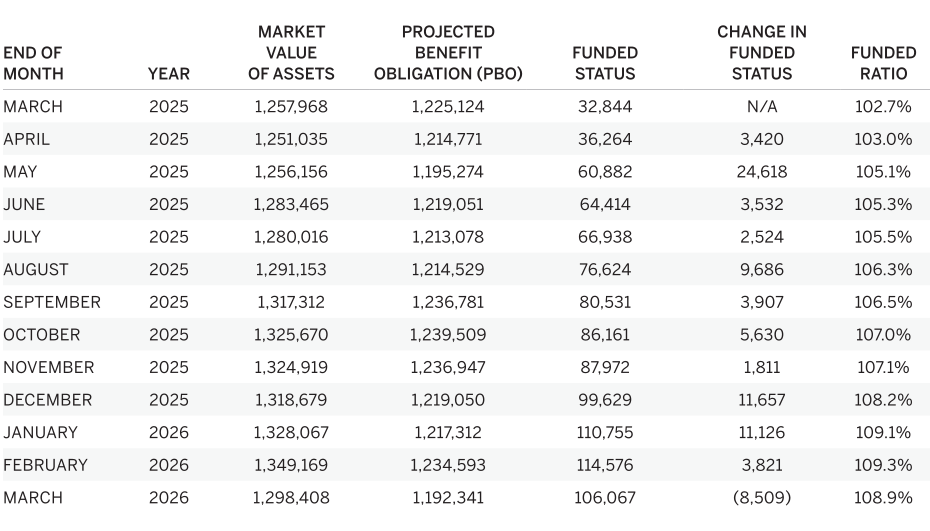
The funded status of the 100 largest U.S. corporate defined benefit pension plans fell by $9 billion during March, as measured by the Milliman 100 Pension Funding Index (PFI). The funded status surplus declined to $106 billion from $115 billion at the end of February 2026 due to negative investment returns incurred during March. Plan liabilities also decreased due to a rise in the benchmark corporate bond interest rates used to value pension liabilities, but not enough to offset the plan asset decline. As of March 31, the funded ratio dropped to 108.9%, down from 109.3% at the end of February. Despite March’s decline, over the course of the first quarter of 2026 the PFI funded status improved by $6 billion.
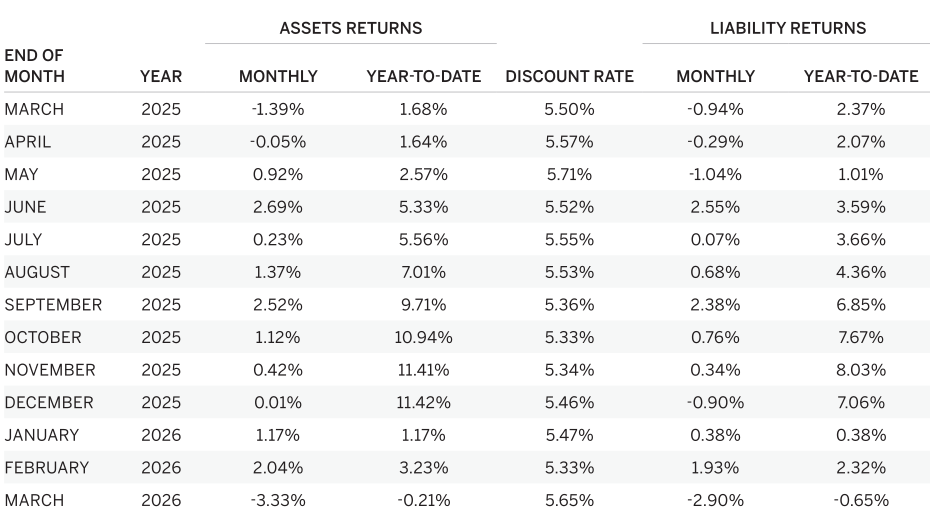
The Milliman 100 PFI asset value fell by $51 billion in March, to $1.298 trillion, driven by poor investment returns of -3.33%. By comparison, the monthly expected investment return during 2024 was 0.53% (6.53% annualized), as reported in the 2025 Milliman Pension Funding Study (PFS). Later in April, Milliman will publish its 2026 Pension Funding Study capturing plan information for fiscal years ending in 2025.
The PFI projected benefit obligation, or pension liabilities, decreased by $42 billion during March to $1.192 trillion as of March 31. The change resulted from an increase of 32 basis points (bps) in the monthly discount rate, from 5.33% for February to 5.65% for March. Discount rates rose overall during the first quarter of 2026 by 19 bps.
Highlights
| $ BILLION | FUNDED PERCENTAGE | |||
|---|---|---|---|---|
| MV | PBO | FUNDED STATUS | ||
| February | 1,349 | 1,235 | 115 | 109.3% |
| March | 1,298 | 1,192 | 106 | 108.9% |
| Monthly change | (51) | (42) | (9) | -0.4% |
| YTD Change | (20) | (27) | +6 | 0.7% |
Note: Numbers may not add up precisely due to rounding
First-quarter 2026 summary
For the quarter ending March 31, 2026, PFI plan assets declined by $20 billion while liabilities fell by $27 billion. While investments posted returns of -0.21% during the period, discount rates rose 19 bps, resulting in a net funded status improvement. The funded ratio of the Milliman 100 companies improved to 108.9% at the end of March from 108.2% at the beginning of 2026.
Over the last 12 months (April 2025 to March 2026), the cumulative asset return for these pensions has been 9.35% and the Milliman 100 PFI funded status surplus grew by $73 billion. Robust investment returns and increasing discount rates drove the funding improvement over the last 12-month period. The funded ratio of the Milliman 100 plans has increased to 108.9% from 102.7% over the past 12 months.
The projected asset and liability figures presented in this analysis will be adjusted as part of Milliman’s 2026 PFS, which will summarize and report on the most recent plan sponsor financials filed with the U.S. Securities and Exchange Commission. The 2026 PFS will also reflect reported pension settlement and annuity purchase activities that occurred during 2025. De-risking transactions generally result in reductions in pension funded status since the assets paid to the participants or assumed by the insurance companies as part of the risk transfer are larger than the corresponding liabilities that are extinguished from the balance sheets. To offset this decrease, many companies engaging in de-risking transactions make additional cash contributions to their pension plans to improve the plan’s funded status.
Figure 1: Milliman 100 Pension Funding Index — Pension surplus/deficit
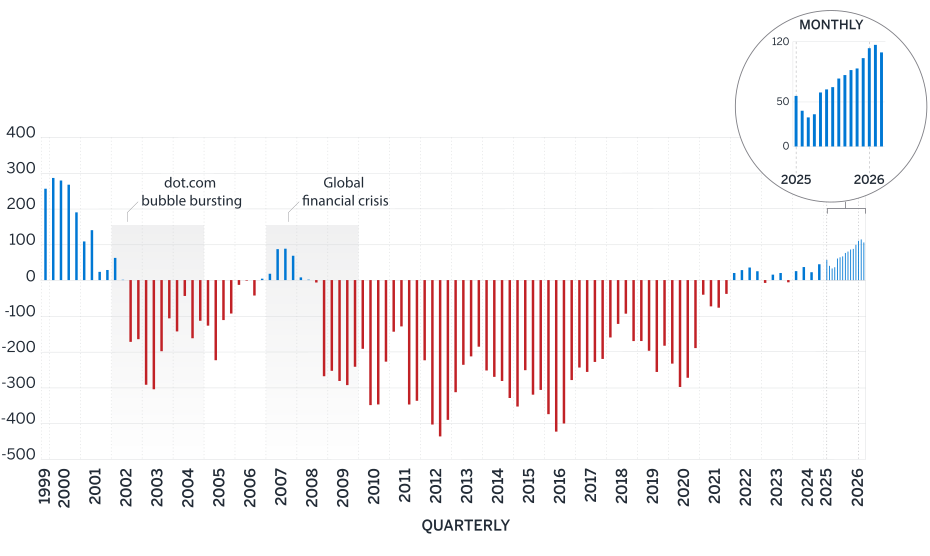
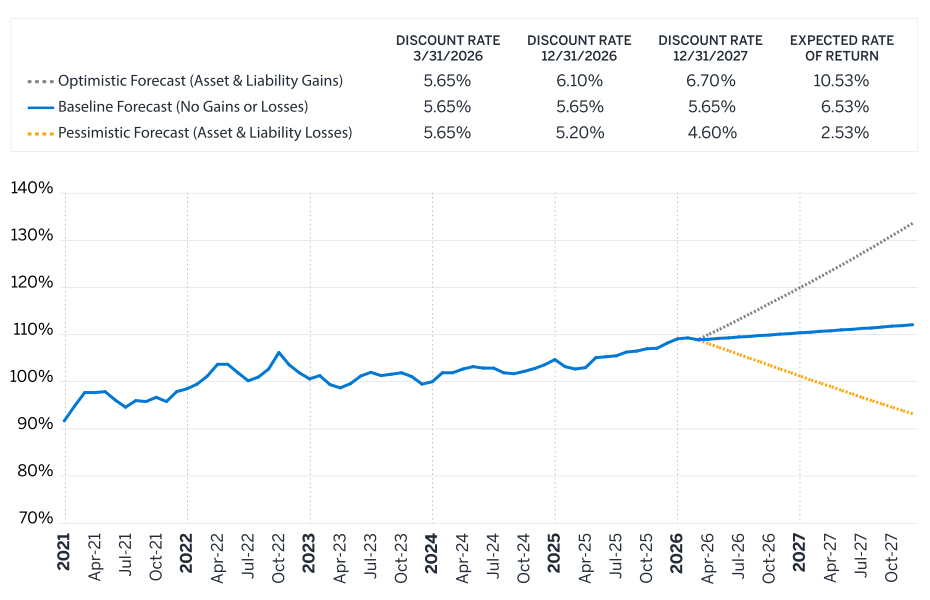
Figure 2: Milliman 100 Pension Funding Index — Pension funded ratio
2026-2027 projections
If the Milliman 100 PFI companies were to achieve the expected 6.53% asset return (as per the 2025 PFS), and if the current discount rate of 5.65% remains unchanged throughout 2026 and 2027, we forecast that the funded status of the surveyed plans will increase. The pension surplus is projected to be $121 billion (funded ratio of 110.2%) by the end of 2026 and $142 billion (funded ratio of 112.1%) by the end of 2027. For purposes of this forecast, we have assumed 2026 and 2027 aggregate annual contributions of $25 billion.
Under an optimistic forecast with rising interest rates (reaching 6.10% by the end of 2026 and 6.70% by the end of 2027) and annual asset returns of 10.53%, the funded ratio is projected to climb to 119% by the end of 2026 and 134% by the end of 2027. Under a pessimistic forecast with similar interest rate and asset movements (5.20% discount rate at the end of 2026 and 4.60% by the end of 2027 and 2.53% annual asset returns), the funded ratio is projected to decline to 102% by the end of 2026 and 93% by the end of 2027.
Milliman 100 Pension Funding Index - March 2026 (all dollar amounts in millions)
Pension asset and liability returns
About the Milliman 100 Pension Funding Index
For the past 25 years, Milliman has conducted an annual study of the 100 largest defined benefit pension plans sponsored by U.S. public companies. The Milliman 100 Pension Funding Index projects the funded status for pension plans included in our study, reflecting the impact of market returns and interest rate changes on pension funded status, utilizing the actual reported asset values, liabilities, and asset allocations of the companies’ pension plans.
The results of the Milliman 100 Pension Funding Index were based on the actual pension plan accounting information disclosed in the footnotes to the companies’ annual reports for the 2024 fiscal year and for previous fiscal years. This pension plan accounting disclosure information was summarized as part of the Milliman 2025 Pension Funding Study, which was published on April 30, 2025. In addition to providing the financial information on the funded status of U.S. qualified pension plans, the footnotes may also include figures for the companies’ nonqualified and foreign plans, both of which are often unfunded or subject to different funding standards than those for U.S. qualified pension plans. They do not represent the funded status of the companies’ U.S. qualified pension plans under ERISA.