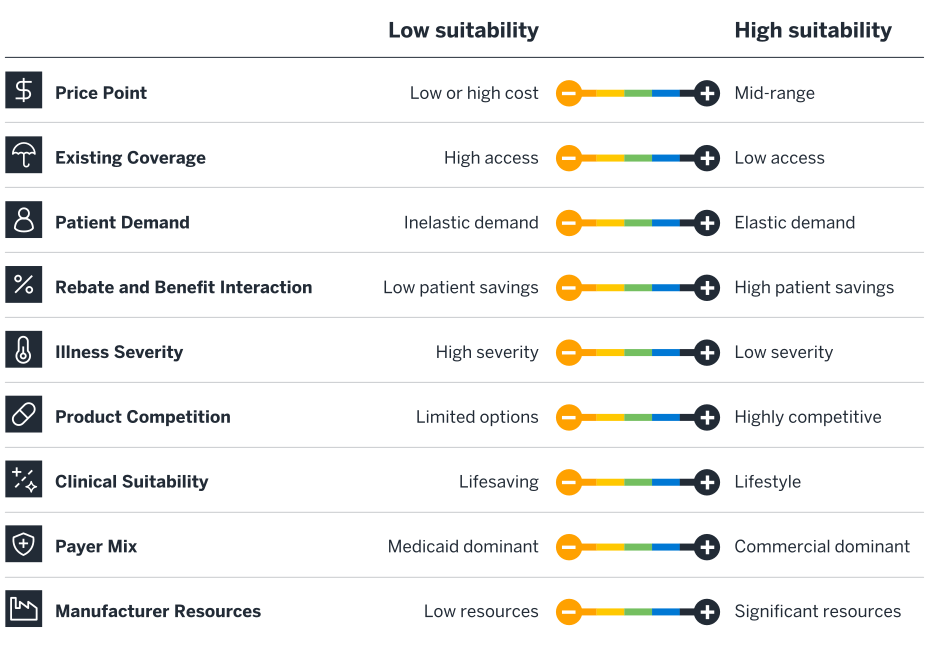
While the vast majority of prescription drugs flow through insurance benefits, direct-to-patient (DTP) (or direct-to-consumer, DTC) programs are rising in popularity. Notably, both Eli Lilly and Novo Nordisk have launched DTP programs for their respective GLP-1 medications, and TrumpRx, which facilitates access to some DTP programs, went live last month, making headlines as these programs have grown.1,2,3 This article offers a framework of considerations to evaluate medication suitability for DTP for manufacturers considering expanding their DTP presence. Figure 1 summarizes key aspects that contribute to DTP attractiveness (or lack thereof) for a given medication from a manufacturer point of view. While each of these characteristics impacts DTP suitability, not all have equal significance, nor does a medication need to have high suitability across all characteristics to be considered suitable.
Figure 1: Characteristics of high and low DTP suitability
Consideration 1 – price point: The market price of a medication fundamentally determines its suitability for DTP.
The economic viability of DTP programs ultimately depends on whether manufacturers can identify price points simultaneously achieving four objectives shown in Figure 2.
Figure 2: Four key DTP program price-point objectives
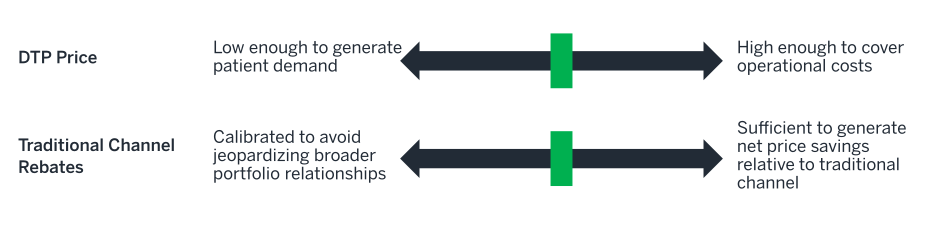
Products have high DTP attractiveness when these competing factors can be balanced. The price point must be high enough to cover costs but low enough to generate patient interest. It also must not be so low as to jeopardize existing supply chain relationships while remaining high enough to generate net revenue increases. Not all products will have a price point that can find a balance among these objectives. Price emerges not as merely another factor but as the dependent variable synthesizing all other considerations. Price is the ultimate factor of whether DTP programs can achieve sustainable economics while delivering meaningful patient access.
Example: DTP prices for a 30-day supply for some products are $346 (Eliquis),4 $249 (Airsupra),5 $299 (Aimovig),6 and $199–$499 (Ozempic).7
Consideration 2 – existing coverage: Products with no coverage or subject to utilization management strategies in traditional channels are better DTP candidates.
Medications subject to utilization management strategies or exclusions are prime DTP candidates. Patients encountering prior authorization, step therapies, narrow pharmacy networks, high cost sharing, or lack of coverage altogether may seek alternative pathways to a therapy. Thus, products facing multiple layers of management can represent greater DTP opportunity.
Categorical benefit exclusions for weight loss medications, cosmetic treatments, fertility drugs, and lifestyle therapies create entire therapeutic categories where insurance may not provide coverage. A DTP channel can enable patient access and generate manufacturer revenue that would otherwise be limited or lost entirely.
Conversely, products with high access are less suited for DTP. A DTP program for a product with rich formulary coverage could be perceived as undermining the value proposition that secured that preferential status, potentially jeopardizing future contracting negotiations for that product.
Example: Wegovy and Zepbound, which both have historically had minimal Medicare Part D coverage,8 are offered through Novo Nordisk’s and Eli Lilly’s respective DTP programs, NovoCare9 and LillyDirect.10
Consideration 3 – patient base: Products with high volume and self-pay persistence—where patient demand persists despite coverage limitations—demonstrate strong DTP potential.
Medications must have a large enough patient base that even small shifts to DTP are impactful enough to the manufacturer’s bottom line to outweigh the costs of operationalizing the program. Further, patient motivation to access these medications must remain high even when insurance coverage is limited or unavailable. Figure 3 illustrates the manufacturer’s potential financial gain from 10% volume growth via DTP even at a lower net price point.
Figure 3: Illustrative impact of 10% volume growth via DTP
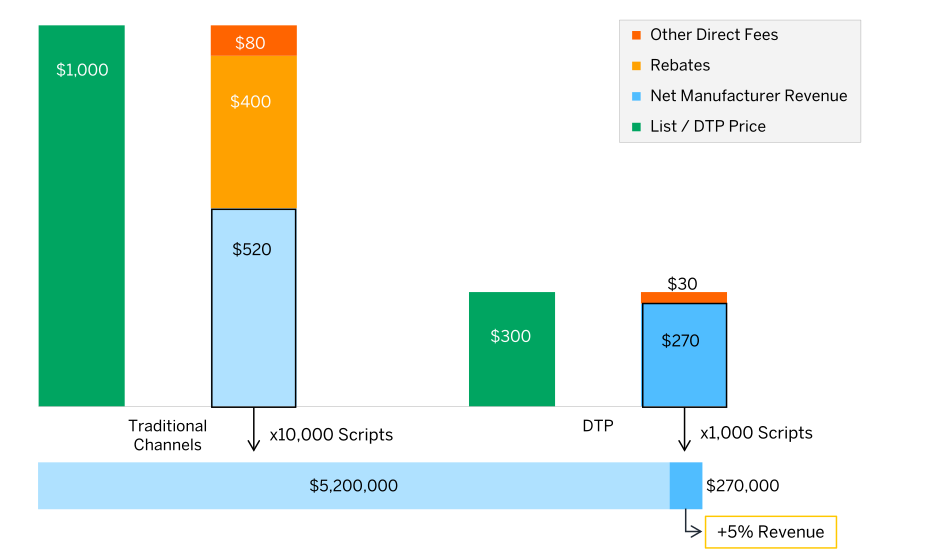
*Other direct fees may include fees with pharmacy benefit managers (PBMs) or channel required subsidies (e.g., Manufacturer Discount Program in Part D). “Traditional channels” represent a weighted average across all other market segments. Other direct fees in a DTP channel may include administrative payments to specialty pharmacies or other distribution partners.
While Figure 3 demonstrates the potential for revenue growth, it is critical to consider the potential for offsetting revenue reductions if a patient shifts from traditional channels. Additionally, under a DTP model, directly coordinating with a specialty pharmacy for implementation may shift the structure of other fees to other supply chain entities, potentially enhancing the revenue position of specialty pharmacies relative to current traditional channel contracting.
Example: Patient motivation to access GLP-1s for chronic weight management remains extraordinarily high even when insurance coverage is limited or unavailable.
Consideration 4 – rebate and benefit interaction: Existing rebate arrangements make DTP economics work for patients and manufacturers.
For products with significant rebate arrangements through traditional channels, DTP programs can meaningfully improve manufacturer financials while at the same time potentially reducing patient costs. This represents one of the rare true win-win scenarios in pharmaceutical economics, where both manufacturer margins and patient affordability improve through disintermediation.
As patient cost sharing increases through the proliferation of high-deductible health plans and increased coinsurance, DTP becomes more attractive to patients.11 Particularly, in the deductible phase, patients receive no direct value from their insurance premium beyond access to negotiated rates (and accumulation toward the deductible/maximum out-of-pocket), and these costs may be higher than DTP prices. Out-of-pocket maximum structures, while ultimately providing financial protection, can leave patients exposed to thousands of dollars in costs during the early months of each plan year, creating a temporary but acute burden DTP pricing may mitigate (benefit design considerations discussed further below).
Figure 4 illustrates how manufacturer revenue and patient cost sharing are impacted when the patient fills a script in the deductible phase of their benefit. This scenario represents the maximum a patient could save when comparing insurance and DTP for a single script, as copays/coinsurance and maximum out-of-pocket limits reduce patient cost sharing as they progress through the insurance benefit.
Figure 4: Lower patient cost sharing and higher manufacturer net revenue for one script filled in the deductible versus purchased under DTP
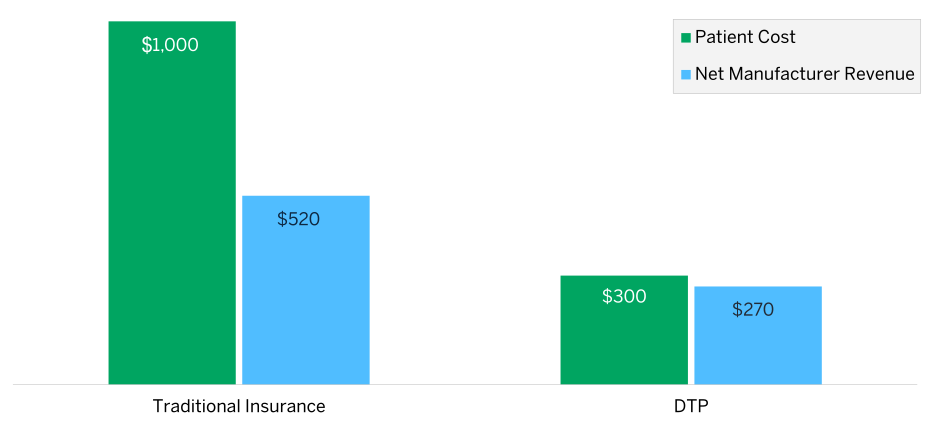
*Assumes patient has a $1,700 deductible and manufacturer has financial outlays consistent with Figure 3.
Example: Traditional channel rebates for Eliquis are likely significant, but a patient may not experience the impact of the rebate at the pharmacy counter.12 Eliquis is offered via Eliquis 360 Support at a 40% discount from list price.13
Consideration 5 – illness severity: Products treating patients who are relatively healthy can provide the most significant cost-sharing savings with the lowest risk through DTP.
While patients may experience lower cost sharing in some cases, separation from the insurance benefit (i.e., DTP costs don’t count toward deductibles and maximum out-of-pocket limits) could result in higher annual cost. Relatively healthy patients, or those who would have most of their spend in the deductible, are most likely to see savings through DTP. Patients who expect to reach their maximum out-of-pocket limit are more likely to find traditional insurance more favorable.
Further, without the pharmacist counter touchpoint, manufacturers need alternative avenues to address patient safety and answer medication questions. There may be fewer safety risks when a medication is indicated for a less severe condition, the medication is straightforward to take, and possible side effects are limited.
Cash-pay pathways cause employers and payers to lose visibility to prescriptions, which inhibits their ability to conduct comprehensive clinical assessments, drug utilization (or drug interaction) reviews, and overall cost management. This may potentially reduce the efficiency of plan interventions for patients with disease management needs.
Example: Repatha, which is generally well tolerated with a low incidence of mild side effects,14 is offered through Amgen’s DTP program, AmgenNow.15
Consideration 6 – product competition: DTP channels can create first-mover advantages or extend the product life cycle.
First-mover advantage in a therapeutic category establishes brand preference and patient loyalty, creating switching costs that persist even if competitors later enter DTP channels. When competing products face access challenges, DTP channels provide direct strategic advantage by offering reliable, rapid access that competitors cannot match through traditional channels.
As patent expiration approaches, DTP channels offer a mechanism to extend brand loyalty and maintain direct patient relationships beyond the loss of exclusivity. The personal relationship and service quality established may command brand loyalty even in the presence of generic alternatives, particularly for patients who value the convenience and support of the integrated platform. Manufacturer-direct channels can also counter compounded product competition by providing manufacturer-verified authenticity, as seen with GLP-1s as compounding of these products has expanded.
Example: Farxiga, which has upcoming generic availability and an authorized generic already on the market, is offered through AstraZeneca’s DTP program, AstraZeneca Direct.16
Consideration 7 – clinical suitability: Lifestyle medications, such as those for weight loss, erectile dysfunction, fertility, or smoking cessation, represent significant DTP opportunity since insurance coverage is frequently excluded or limited.
High patient motivation drives willingness to pay out of pocket when necessary. Potential stigma associated with these conditions means patients often prefer the privacy of direct delivery rather than pharmacy counter interactions. Physician hesitation to prescribe certain therapies, along with a growing online community of patients, can also lead to DTP growth. Established DTP precedent in these categories through DTP advertising and online pharmacy offerings means patients already accept this model.17,18 Finally, patients have more price sensitivity to lifestyle drugs and treatments, making transparent, affordable pricing a critical factor in patient decision making.
Example: TrumpRx offers access to several fertility products, including Cetrotide and Gonal-f.19
Consideration 8 – payer mix: Products with a larger share of commercial and uninsured patients are best suited for DTP.
Uninsured and self-pay populations represent the primary DTP target, while commercial insured patients present a growing opportunity. Medicare and Medicaid populations are faced with more barriers to DTP success. Figure 5 displays the opportunity among market segments for DTP.
Figure 5: Attractiveness of DTP by market segment – patient perspective
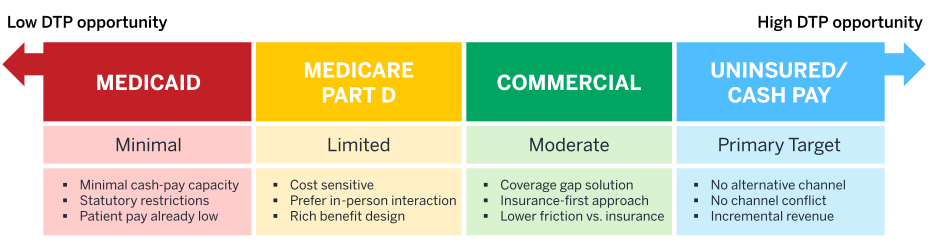
Within the four core market segments in Figure 5, if volume filled at covered entities or their contract pharmacies shifts to DTP, the volume of existing 340B claims would decrease, representing an opportunity to increase the gross-to-net (GTN) expectations for a product and reduce duplicate discount risk. Products with substantial 340B utilization should model the financial implications of channel shift, recognizing that reduced 340B exposure may improve manufacturer margin but could also generate scrutiny from covered entities and policymakers.
Example: GLP-1 products, which have a substantial portion of patients purchasing them through online providers,20 are offered through NovoNordisk’s NovoCare and Eli Lilly’s LillyDirect DTP programs.
Consideration 9 – resources for operationalization: Once a decision is made to launch a DTP program, implementation steps begin to operationalize the program.
Effectuation can be a complex process, and manufacturers may not have the resources set up to handle the logistics for providing products directly to patients and may need to weigh the cost of implementing their own distribution network against partnering with existing distribution networks.
In traditional channels, manufacturers typically sell prescription drugs to wholesalers, and the drug is dispensed by a pharmacy following the pharmacy’s acquisition from the wholesaler. Under a DTP model, patients purchase the drugs directly from the manufacturer. Manufacturers may be able to partner with a distribution company to quickly set up a delivery network. Additionally, a manufacturer may be able to leverage a patient delivery network associated with an existing patient assistance program (PAP), if one exists. Manufacturers will also need to consider the expected patient volume compared to fixed implementation costs.
Example: Merck, one of the largest manufacturers in the United States and globally,21 is set to offer their new PCSK9 inhibitor, as well as Januvia and Janumet, through a DTP program.22
To DTP or not to DTP — that is the question
Whether a DTP program is financially positive for a pharmaceutical manufacturer is a complex one with a vast array of considerations that may push a given product toward a go or no-go decision. Beyond product-specific characteristics, there are operational and regulatory considerations to factor in:
- Develop sales generation strategy: Generating additional sales outside of traditional channels will likely need to be accompanied by additional marketing efforts, leveraging social media or coordinating with telehealth platforms to raise awareness.
- Comparative analysis of implementation partners: A comparative evaluation of potential distribution partners, such as specialty pharmacies and telehealth providers, is critical to the success of the DTP program. There may be opportunities for a win-win revenue dynamic between manufacturers and their distribution partners.
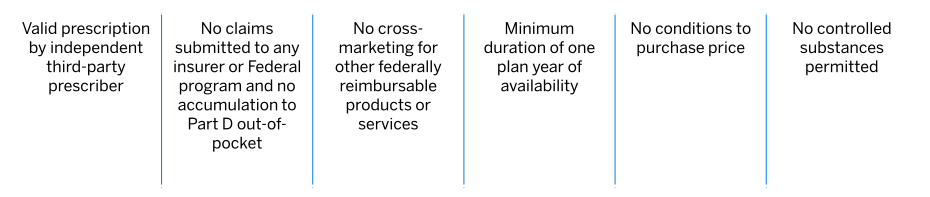
- Ensuring Anti-Kickback Statute (AKS) compliance: DTP program designs should ensure compliance with the AKS, particularly when patients move between government programs and DTP channels. The Office of Inspector General (OIG) released a Special Advisory Bulletin outlining characteristics of DTP programs that minimize the risk of violations to the AKS, as shown in Figure 6.23
Figure 6: OIG Special Advisory Bulletin characteristics of low-AKS-risk DTP programs
The current and evolving regulatory landscape must be considered along with financial forecasts and operational planning as DTP programs are designed and evaluated. Scenario testing, in addition to maintaining compliance, is critical to validate the sustainability of the program without sacrificing traditional channel revenue and relationships. For manufacturers evaluating a DTP presence, detailed financial projections regarding price points, patient elasticity, competitor programs, and contract evaluation should be the baseline of decisions.
1 Eli Lilly. (January 4, 2024). Lilly launches end-to-end digital healthcare experience through LillyDirect™. Lilly Investors. Retrieved March 9, 2026, from https://investor.lilly.com/news-releases/news-release-details/lilly-launches-end-end-digital-healthcare-experience-through.
2 PR Newswire. (March 5, 2025). Novo Nordisk introduces NovoCare® Pharmacy, lowering cost of all doses of FDA-approved Wegovy® (semaglutide) to $499 per month and offering easy home delivery for cash-paying patients. Retrieved March 9, 2026, from https://www.prnewswire.com/news-releases/novo-nordisk-introduces-novocare-pharmacy-lowering-cost-of-all-doses-of-fda-approved-wegovy-semaglutide-to-499-per-month-and-offering-easy-home-delivery-for-cash-paying-patients-302392874.html.
3 Constantino, A. K., & Pramuk, J. (February 5, 2026). White House launches direct-to-consumer drug site TrumpRx. Here’s what to know. CNBC. Retrieved March 9, 2026, from https://www.cnbc.com/2026/02/05/trump-rx-white-house-launches-direct-to-consumer-drug-site.html.
4 Eliquis. (2025). Questions about the ELIQUIS direct-to-patient program? [Informational sheet]. Retrieved March 9, 2026, from https://www.eliquis.bmscustomerconnect.com/assets/commercial/us/eliquisbmscustomerconnect/en/pdf/dtp_eliquis.pdf.
5 AstraZeneca Direct. (n.d.). AstraZeneca Direct helps determine your eligibility and guides you through available support options [Informational webpage about Airsupra]. Retrieved March 9, 2026, from https://www.azpatientdirect.com/airsupra.
6 AmgenNow. (n.d.). Welcome to AmgenNow™ – direct access to your Amgen medicine [Informational webpage]. Retrieved March 9, 2026, from https://www.amgennow.com.
7 NovoCare. (n.d.). Get savings and support for Ozempic® [Informational webpage]. Retrieved March 9, 2026, from https://www.novocare.com/diabetes/products/ozempic/savings-offer.html.
8 Centers for Medicare and Medicaid Services. (2026). 2026 CMS Basic Formulary Files. Available from https://www.cms.gov/medicare/coverage/prescription-drug-coverage/formulary-guidance.
9 NovoCare. (n.d.). Support starts here [Informational webpage]. Retrieved March 9, 2026, from https://www.novocare.com.
10 LillyDirect. (n.d.). Science meets speed: FDA-approved medicines, delivered to you [Informational webpage]. Retrieved March 9, 2026, from https://www.lilly.com/lillydirect/medicines.
11 U.S. Bureau of Labor Statistics. (April 11, 2025). High deductible health plans and health savings accounts. Retrieved March 9, 2026, from https://www.bls.gov/ebs/factsheets/high-deductible-health-plans-and-health-savings-accounts.htm.
12 Bristol Myers Squibb. (July 17, 2025). Bristol Myers Squibb and Pfizer announce direct-to-patient Eliquis® (apixaban) option. Retrieved March 9, 2026, from https://news.bms.com/news/details/2025/Bristol-Myers-Squibb-and-Pfizer-Announce-Direct-to-Patient-Eliquis-apixaban-Option/default.aspx.
13 AstraZeneca Direct. (n.d.). AstraZeneca Direct helps determine your eligibility and guides you through available support options [Informational webpage about Farxiga]. Retrieved March 9, 2026, from https://www.azpatientdirect.com/farxiga.
14 Repatha. (n.d.). Side effects. Retrieved March 9, 2026, from repatha-side-effects https://www.repatha.com/.
15 Amgen. (October 6, 2025). Amgen makes Repatha® available through AmgenNow, a direct-to-patient program in the U.S. Retrieved March 9, 2026, from https://www.amgen.com/newsroom/press-releases/2025/10/amgen-makes-repatha-available-through-amgennow-a-directtopatient-program-in-the-us.
16 AstraZeneca Direct. (n.d.). Welcome to AstraZeneca Direct. Retrieved March 9, 2026, from https://www.azpatientdirect.com.
17 Loghmani, E., & Goli, A. (March 27, 2024). Investigating the impact of advertising on smoking cessation: The role of direct-to-consumer prescription drug advertising. SSRN. Retrieved March 9, 2026, from https://papers.ssrn.com/sol3/papers.cfm?abstract_id=4775370.
18 Li, M. K., Patel, D. P., & Hsieh, T.-C. (2025). Direct-to-consumer erectile dysfunction medications: Is the convenience worth the cost? Current Urology Reports, 26(1), 69. Retrieved March 9, 2026, from https://pmc.ncbi.nlm.nih.gov/articles/PMC12575493/.
19 TrumpRx. (n.d.). Buy medications at the lowest cash prices. Retrieved March 9, 2026, from https://trumprx.gov/browse.
20 KFF. (November 14, 2025). Poll: 1 in 8 adults say they are currently taking a GLP-1 drug for weight loss, diabetes or another condition, even as half say the drugs are difficult to afford. Retrieved March 9, 2026, from https://www.kff.org/public-opinion/poll-1-in-8-adults-say-they-are-currently-taking-a-glp-1-drug-for-weight-loss-diabetes-or-another-condition-even-as-half-say-the-drugs-are-difficult-to-afford/.
21 AlphaSense. (January 5, 2026). Largest pharmaceutical companies by market cap in 2026. Retrieved March 9, 2026, from https://www.alpha-sense.com/largest-pharmaceutical-companies-by-market-cap/.
22 Merck. (December 19, 2025). Merck reaches agreement with U.S. government to expand access to medicines and lower costs for Americans. Retrieved March 9, 2026, from https://www.merck.com/news/merck-reaches-agreement-with-u-s-government-to-expand-access-to-medicines-and-lower-costs-for-americans/.
23 Office of Inspector General. (January 27, 2026). Special Advisory Bulletin: Application of the federal Anti-Kickback Statute to direct-to-consumer prescription drug sales by manufacturers to patients with federal health care program coverage. U.S. Department of Health and Human Services. Retrieved March 9, 2026, from https://oig.hhs.gov/documents/special-advisory-bulletins/11450/OIG--FINAL--Special-Advisory-Bulletin.pdf.