Executive summary: How Medicare Advantage dental care use correlates with overall health
Dental care is not covered as part of the traditional Medicare benefit, yet oral health and overall health are intertwined. More than half of all Medicare beneficiaries now obtain their coverage through Medicare Advantage (MA), and a majority of those MA enrollees purchase—or often automatically receive—some level of dental coverage.1,2
Because MA plans frequently include supplemental dental benefits, they represent a unique opportunity to study how access to and use of dental care interact with other aspects of health and cost. However, the relationships shown in this paper may also apply to other insured populations.
Leveraging Milliman’s 2023 Consolidated Health Cost Guidelines™ Sources Database (CHSD), a proprietary administrative health claim database, we examined claims data for roughly 1.34 million beneficiaries enrolled in MA plans and whose benefits included both preventive and comprehensive dental services. Our work concentrated on four highly prevalent chronic conditions—diabetes, congestive heart failure (CHF), chronic obstructive pulmonary disease (COPD), and a history of stroke. We compared dental utilization, medical and pharmacy claim costs, and medical risk scores between members who utilized their dental benefits versus those who did not. We further stratified results for dental utilizers who did and did not receive at least one routine dental examination (hereafter referred to simply as an exam) during the calendar year as an indicator of people seeking routine preventive dental care rather than using dental services only when a problem emerges.
Four major observations emerged.
- Members who used dental services and obtained an exam consumed more dental services than those who didn’t have an exam. However, the services were primarily preventive in nature; those with an exam consumed relatively fewer nonpreventive dental services than other utilizers. These results were consistent across the four chronic condition cohorts.
- Within every chronic condition cohort, members with an exam posted materially lower prospective risk scores, under both the Centers for Medicare and Medicaid Services hierarchical condition category (CMS-HCC)3 (medical only) and Milliman Advanced Risk Adjusters® (MARA)4 (medical and prescription drug combined) models—objective signals of lower predicted medical and/or prescription drug costs and utilization. Members with an exam had lower risk scores than both those who did not utilize any dental services and other dental utilizers.
- Within each condition category, members with an exam had lower medical costs than both those who did not use any dental services and other dental utilizers.
- Prescription drug costs were broadly similar for dental utilizers whether or not they had an exam, and drug costs were higher for those accessing dental care than for beneficiaries who did not use dental benefits during the year. Notably, this implies drug costs for members with an exam were higher than nonutilizers, which contrasts with what was observed for medical expense.
Taken together, the findings indicate correlation (but not causation) between routine preventive dental care and increased engagement with the healthcare system, implying potentially better self-care management, particularly among beneficiaries who manage complex conditions.
What we studied: dental utilization, risk scores, and health care costs among Medicare Advantage beneficiaries with and without chronic conditions
This paper pursues four topics. We first describe dental utilization patterns among MA beneficiaries with dental coverage, distinguishing between those who do and do not live with the chronic conditions listed previously. Within each chronic disease category, we then compare prospective risk scores, a forward-looking measure of expected healthcare cost, for members who did not use dental services, those who did use services but did not obtain an exam, and those who did obtain an exam. Next, we measure concurrent calendar-year medical and pharmacy spending differences among the three groups. Finally, we offer hypotheses that may explain the observed patterns and discuss strategic considerations for MA sponsors and for the broader dental insurance market.
What we learned: Correlations among dental utilization, risk scores, and health care costs by chronic disease status
Utilization patterns
For our MA population with comprehensive dental coverage in 2023, we assigned members to five categories according to the named chronic conditions or absence thereof. We then identified which members in each category utilized any dental services. The utilizer group was further split into two subgroups: those with an exam (defined as a claim with Current Dental Terminology (CDT) Code D0120 and/or D0150, periodic or comprehensive oral evaluations, respectively) and those without. Figure 1 shows the distribution of members within chronic condition categories.
Figure 1: Proportions of MA population in chronic condition categories utilizing dental services and having an exam during the plan year
| Condition | Dental Utilization Category |
Distribution |
|---|---|---|
| Members Without Chronic Conditions Considered | Did Not Utilize Dental Utilized Dental, No exam Utilized Dental, With exam |
71% 4% 24% |
| Members With Diabetes | Did Not Utilize Dental Utilized Dental, No exam Utilized Dental, With exam |
67% 5% 28% |
| Members with CHF | Did Not Utilize Dental Utilized Dental, No exam Utilized Dental, With exam |
71% 5% 24% |
| Members with COPD | Did Not Utilize Dental Utilized Dental, No exam Utilized Dental, With exam |
70% 6% 24% |
| Members with Stroke | Did Not Utilize Dental Utilized Dental, No exam Utilized Dental, With exam |
71% 5% 24% |
Figure 2 provides a breakdown of utilization for MA beneficiaries who used their dental benefit (dental utilizers) by chronic disease category. Among patients with diabetes, CHF, COPD, or a history of stroke, those with evidence of an exam received 2.6- to 2.8-times the preventive dental services (cleanings, routine X-rays, etc.) but about 16% to 24% fewer comprehensive dental services than similar patients who used dental services but did not have an exam. Utilizers with none of those conditions with evidence of an exam incurred 2.8 times the number of preventive procedures and 35% fewer comprehensive dental services compared to utilizers who did not have an exam. Note that for all groups, those beneficiaries who receive exams use significantly more preventive services, which tend to be lower cost, and significantly fewer comprehensive services, which tend to be higher cost, than utilizers without an exam.
Figure 2: 2023 dental utilization by MA members who use dental services and did/did not obtain an exam by chronic condition
| Population | With/Without exam | Prev. Dental Util./K | Ratio of Prev. Dental Utilization | Comp. Dental Util./K | Ratio of Comp. Dental Utilization | Total Dental Util./K | Ratio of Total Dental Utilization |
|---|---|---|---|---|---|---|---|
| Members without chronic conditions considered | Without | 1,673 | 2,399 | 4,072 | |||
| With | 4,756 | 2.8 | 1,549 | 0.65 | 6,305 | 1.55 | |
| Members with diabetes | Without | 1,898 | 2,594 | 4,492 | |||
| With | 4,878 | 2.6 | 1,979 | 0.76 | 6,857 | 1.53 | |
| Members with CHF | Without | 1,799 | 2,397 | 4,196 | |||
| With | 4,733 | 2.6 | 1,901 | 0.79 | 6,634 | 1.58 | |
| Members with COPD | Without | 1,804 | 2,627 | 4,432 | |||
| With | 4,794 | 2.7 | 2,217 | 0.84 | 7,011 | 1.58 | |
| Members with stroke | Without | 1,735 | 2,533 | 4,269 | |||
| With | 4,818 | 2.8 | 2,115 | 0.83 | 6,932 | 1.62 |
We also compared dental utilization for beneficiaries with diabetes, CHF, COPD, or a history of stroke to beneficiaries without one of those conditions. For beneficiaries with an exam, those with diabetes, CHF, COPD, or a history of stroke had between 5.2% to 11.2% higher total dental utilization compared to those with none of those conditions. Dental utilizers with exams who have one or more of these four chronic conditions use dental services at a higher rate than those without them.
Prospective risk scores
Most employers, insurers, and analytics vendors have access only to siloed data from two separate claim payment systems—one for medical claims and one for dental claims. As a result, these entities typically evaluate medical‐risk scores, such as those calculated under the CMS-HCC risk adjustment and MARA models, in isolation from any information about dental utilization and cost. Likewise, entities focusing only on dental claims may not have information about medical diagnosis or overall healthcare utilization and cost. In an MA environment, the health plan is often responsible not just for Part C medical benefits but the supplemental dental benefit as well. This integration creates an opportunity rarely available in commercial or traditional Medicare settings—access to a more complete picture of whole-person health, including medical and dental components, providing the ability to analyze correlations between the two.
The risk scores shown in this paper are prospective risk scores, which means that they predict future costs using prior year information. A risk score greater than 1.0 implies higher costs on average, while a risk score less than 1.0 implies lower costs on average. The CMS-HCC risk scores are used to risk adjust MA plan payments to acknowledge higher medical costs for beneficiaries with higher morbidity. The CMS-HCC risk score model analyzed in this study relies on medical claim diagnosis code data and demographic information in its calculations to predict future medical costs. CMS utilizes a separate risk model to predict future prescription drug expenses. The MARA Medicare DxXPLN total prospective risk score uses demographic and medical claim data to develop a risk score meant to explain future medical and prescription drug costs. We provide both risk scores as additional reference points on the relative total claim costs for the populations we are analyzing.
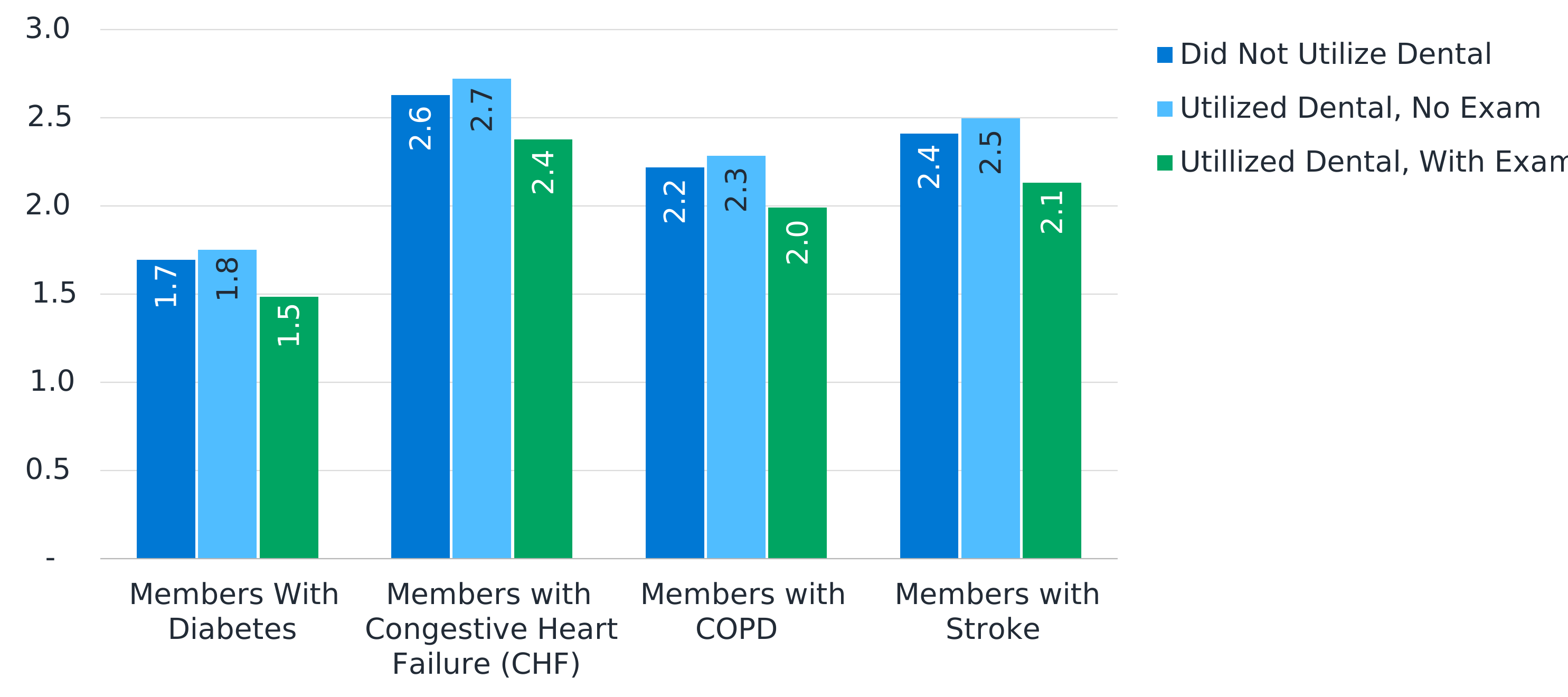
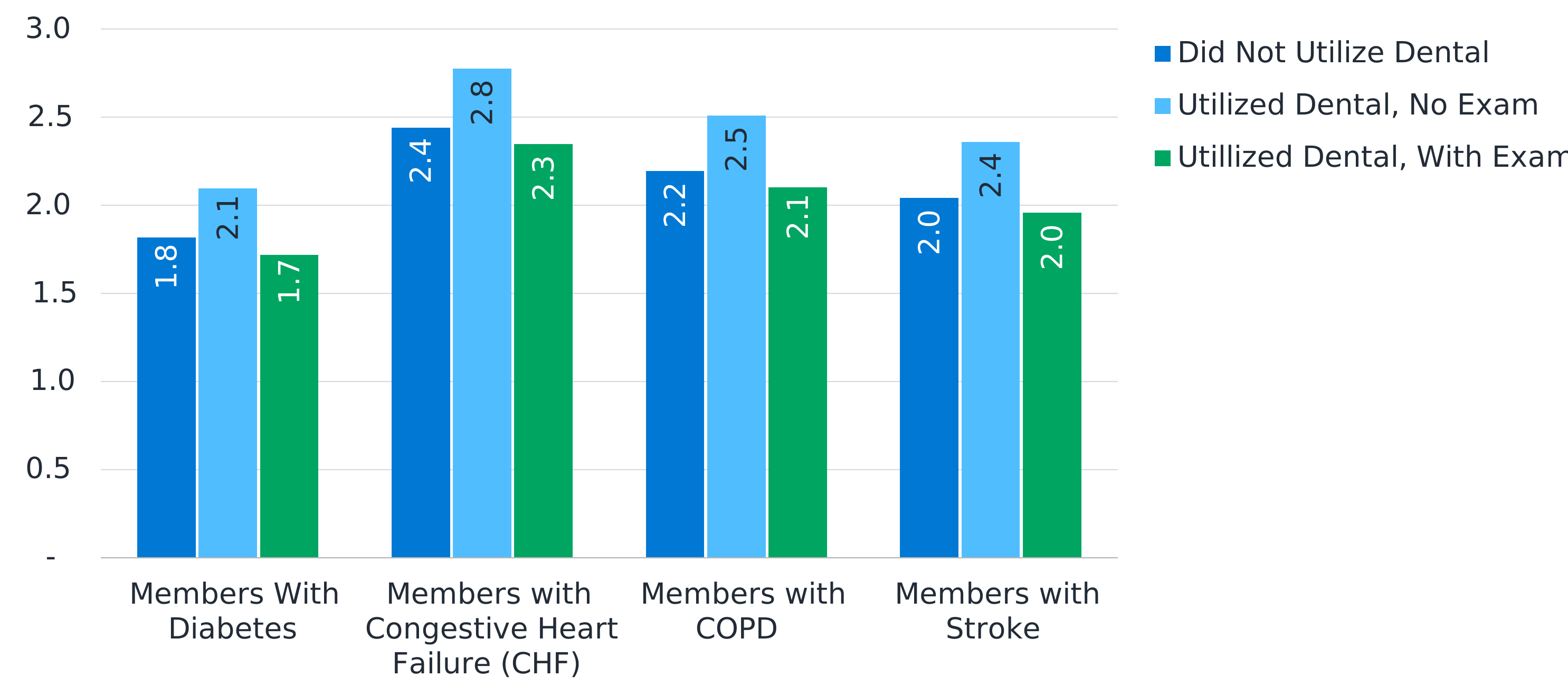
See Figures 3 and 4 for a comparison of risk scores between beneficiaries with dental coverage who do not use dental services and those who do, with dental utilizers further split by those who obtained an exam and those who did not. While overall utilization of dental services is significantly higher for beneficiaries who have exams, the risk scores, and hence estimated projected healthcare costs, are lower for those beneficiaries, regardless of whether the risk score includes pharmacy costs. In every chronic condition group, the CMS-HCC scores for dental utilizers with exams were between 9.5% to 12.3% lower than for beneficiaries who did not use their dental benefit, and the MARA scores were roughly 3.8% to 5.4% lower.
Figure 3: MA members’ CMS-HCC risk scores by chronic condition population with and without evidence of a nonproblem-focused dental visit in 2023
Source: Centers for Medicare and Medicaid Services. (2020). CMS-HCC community non-dual aged risk score (based on model year 2023) (Version 24) [data set].
Figure 4: MA members’ MARA Medicare DX total prospective risk scores by chronic population with and without evidence of a nonproblem-focused dental visit in 2023
Source: Milliman. (2025). Milliman Advanced Risk Adjusters (MARA) MCRDxXPLN prospective model (equal to sum of MCRXPLN_DxPro_Rx and MCRXPLN_DxPro_Medical) (Version 5) [data set].
Current year medical/pharmacy spending
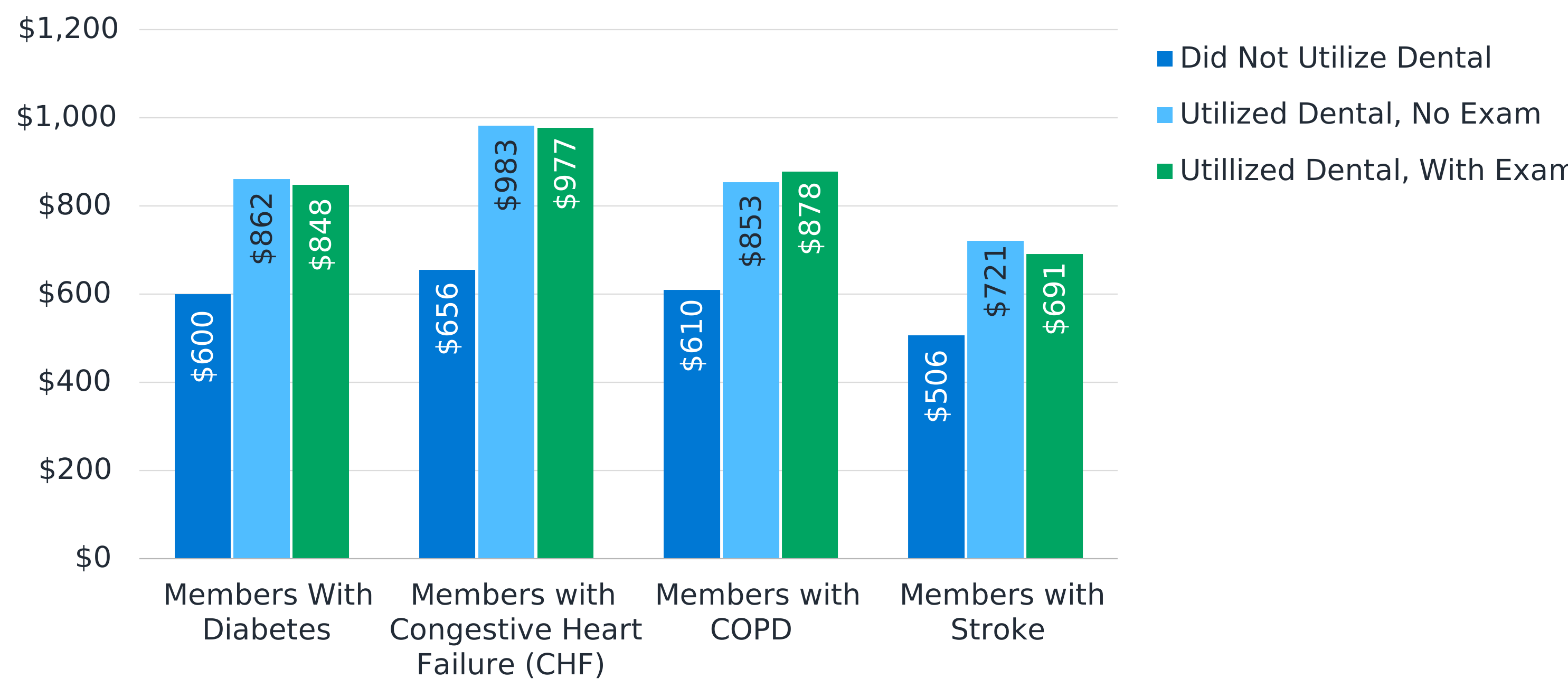
We calculated 2023 actual medical allowed costs per member per month (PMPM) for MA beneficiaries according to the same cohorts as the risk score breakdowns. Within each disease cohort, dental utilizers with an exam had lower medical costs than both utilizers without an exam and dental nonutilizers. On the other hand, prescription drug costs were broadly similar for dental utilizers whether or not they had an exam, and costs were higher for those accessing dental care than for dental nonutilizers. Figures 5 and 6 show MA members’ 2023 medical and prescription drug, respectively, PMPM allowed cost by chronic condition population for dental utilizers with and without a routine dental visit compared to dental nonutilizers.
Figure 5: MA 2023 medical allowed costs by chronic condition with and without evidence of a nonproblem-focused dental visit in 2023
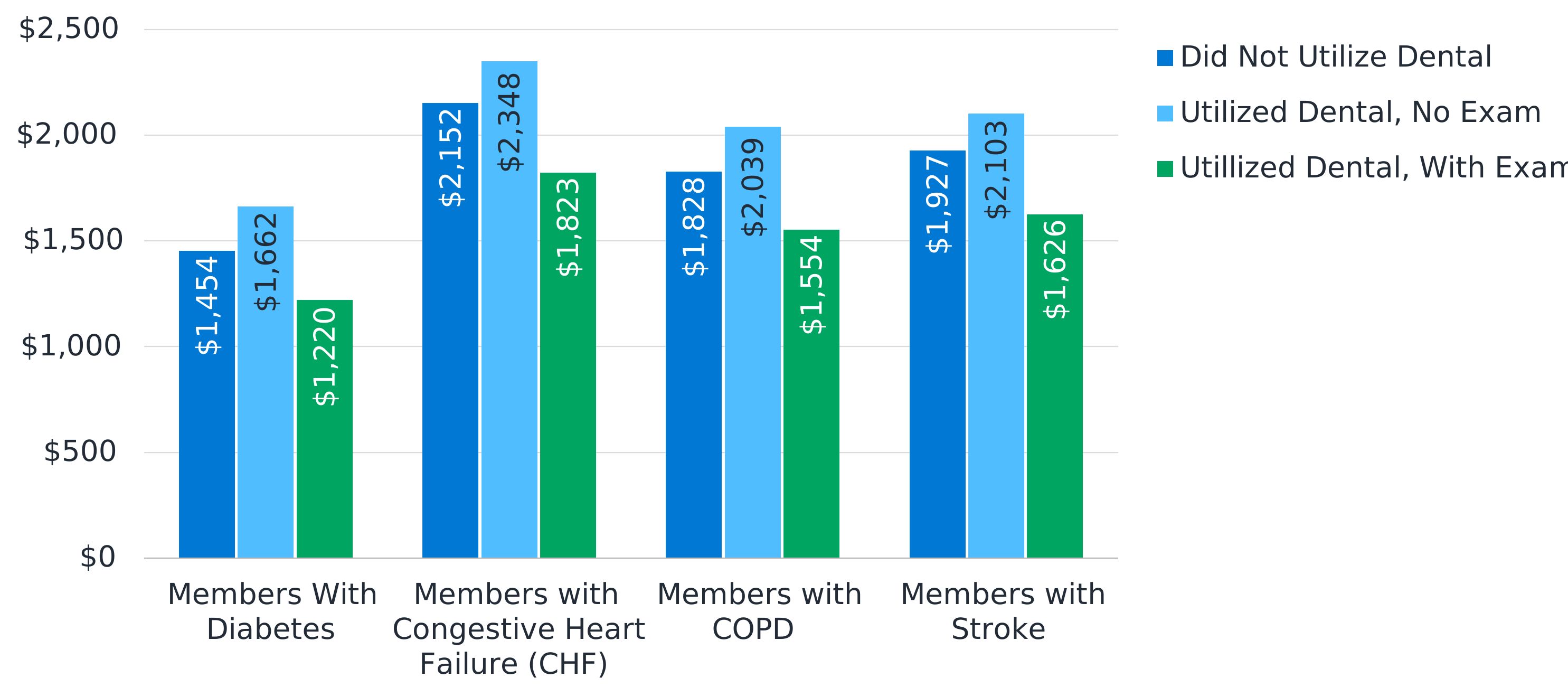
Figure 6: MA 2023 prescription drug allowed costs by chronic condition with and without evidence of a nonproblem-focused dental visit in 2023
What does it mean?
What are some possible explanations for the medical cost, pharmacy cost, and risk score differentials among cohorts with different dental utilization profiles? Within each chronic condition group, those who utilize exams have lower risk scores, potentially reflecting proactive behaviors on the beneficiaries’ part to better manage their disease and overall health. While correlation is not causation and further detailed studies are required to better understand what is driving these lower risk scores, the differences are significant and worth considering for carriers covering the care of such members. An exam might also serve as a proxy for broader health system engagement; individuals who keep preventive dental appointments may also be more likely to keep primary care or specialist appointments and may adhere to medication and lifestyle recommendations.
What can MA organizations learn about their beneficiaries based on their dental utilization?
For plan sponsors, these patterns, e.g., lower medical costs, suggest that dental benefits are more than an additional feature to attract members. From our study, we saw that members within the same disease cohorts who received exams had lower medical costs than like members without exams. While simply offering dental benefits does not necessarily change the behavior of your plan population, covering exams makes it possible for beneficiaries to have more contact with healthcare providers. When the beneficiaries have more preventive visits, the plan sponsor may identify high-risk members earlier, create additional touchpoints for care-management outreach, or find issues early on before they become a serious problem. Dentists can reinforce messages about glycemic control, blood pressure monitoring, and medication adherence.
Methodology
All analytic work relied on Milliman’s proprietary CHSD, an anonymized claims repository comprising enrollment, medical, pharmacy, and dental data on approximately 1.34 million MA members. We confined our window to calendar year 2023. To ensure that the scope of covered services was broad rather than emergency-only, we included only members with evidence of coverage for at least one preventive dental service (e.g., oral exams, cleanings, X-rays) and at least one comprehensive dental service (e.g., diagnostic, endodontic, extractions, implants, periodontic, restorative, nonroutine, or prosthodontic) during the year.
The study flagged two CDT codes—D0120 (periodic oral evaluation) and D0150 (comprehensive oral evaluation)—as evidence of a nonproblem-focused dental exam, which we refer to as routine dental exams (exams) within this paper. Using the CMS-HCC Version 24 risk adjustment model, we identified diagnoses that place a beneficiary into one of four chronic condition categories: diabetes (HCC 17–19), CHF (HCC 85), COPD (HCC 111), and a history of stroke (HCC 100). A member will appear in multiple cohorts if that member has multiple conditions. For each cohort, we calculated dental utilization rates per 1,000 members, prospective risk scores from both the CMS-HCC and MARA Medicare DxXPLN models, and allowed medical and prescription drug cost PMPM.
Limitations
All observational studies face constraints. Our data set skews geographically, with approximately 63% of dental-covered members residing in Michigan, New York, Ohio, Pennsylvania, or Wisconsin; results may differ elsewhere. We lacked plan-level detail on whether MA supplemental dental coverage was mandatory or optional, and we could not distinguish general population plans from special needs plans. Socioeconomic factors, local provider supply, disposable income level, and transportation access—variables that could influence both dental utilization and health outcomes—were not considered. The medical and prescription drug costs were not risk adjusted nor normalized for differences due to age, gender, or geography. Dental nonutilizers may use providers not covered under their MA plan, paying for their dental care out of pocket, and therefore may have dental utilization that is not captured in our data.
Next steps
Longitudinal follow-up studies may clarify whether routine dental care translates into lower healthcare utilization or fewer major medical events over a multiyear time frame. Additional studies about which dental procedures exhibit the strongest correlation with lower medical claims overall will help shed light on which procedures may be most important for plan sponsors to include in coverage. This paper only considered a general MA population and did not consider commercial or Medicaid populations—further study by income status, dual eligible status within the MA population, commercial group plans that offer both dental and medical coverage, and Medicaid states that offer comprehensive dental benefits all present additional avenues for evaluating correlations between preventive dental use and overall health status. Lastly, this paper only evaluated diabetes, CHF, COPD, and a history of stroke. Additional study of beneficiaries with other conditions may help identify which conditions are most correlated with medical claim savings.
Conclusion
Routine dental examinations correlate with higher use of dental services, lower prospective medical risk scores, and lower concurrent medical costs among MA members living with diabetes, CHF, COPD, or a history of stroke. MA organizations, and other insurers as well, seeking to manage total cost of care and enhance member experience might consider preventive dental benefits as an integral component of chronic disease strategy rather than a peripheral add-on.
1 Ochieng, N., Freed, M., Biniek, J. F., Damico, A., & Neuman, T. (July 28, 2025). Medicare Advantage in 2025: Enrollment update and key trends. Retrieved December 12, 2025, from https://www.kff.org/medicare/medicare-advantage-enrollment-update-and-key-trends/.
2 Fontana, J., Hosein, M., Konbaz, B., & Youngblood, G. (February 17, 2025). Dental coverage in Medicare Advantage plans: A first look at 2025 coverage levels. Retrieved December 12, 2025, from https://www.milliman.com/en/insight/dental-coverage-medicare-advantage-2025.
3 Centers for Medicare and Medicaid Services. (December 9, 2024). Risk adjustment technical steps and risk factor specifications [data set]. Retrieved December 12, 2025, from https://www.cms.gov/files/document/risk-adjustment-technicalspecifications2025.pdf.
4 Milliman. (2025). Milliman Advanced Risk Adjusters (MARA) DxXPLN and MCRDxXPLN models (Version 5) [data sets]. More information available from https://www.milliman.com/en/products/mara.