The 2026 edition of the Milliman Corporate Pension Funding Study (PFS) is our 26th annual analysis of the financial disclosures of the 100 U.S. public companies sponsoring the largest defined benefit (DB) pension plans. These 100 companies are ranked highest to lowest by the value of their pension assets as of the end of fiscal year (FY) 2025. These values have been reported to the public, to shareholders, and to the U.S. federal agencies with an interest in such disclosures.
Key results for 2025
- The funded percentage increased from 101.1% to 103.8%.
- The funded status surplus improved from $13.4 billion to $48.1 billion.
- The average return on investments was 8.80%.
- The average discount rate decreased from 5.39% to 5.31%.
- The average expected return on assets assumption increased from 6.54% to 6.61%.
Figure 1: Highlights (in $ billions)
| Fiscal Year Ending | |||
| 2024 | 2025 | Change | |
| Funded Percentage | 101.1% | 103.8% | 2.7% |
| Market Value of Assets | $1,254.1 | $1,301.5 | $47.4 |
| Projected Benefit Obligation | $1,240.7 | $1,253.4 | $12.7 |
| Funded Status | $13.4 | $48.1 | $34.7 |
| Expected Rate of Return | 6.54% | 6.61% | 0.07% |
| Actual Rate of Return | 3.60% | 8.80% | 5.20% |
| Discount Rate | 5.39% | 5.31% | -0.08% |
| Net Pension Income/(Cost) | $2.4 | $2.2 | ($0.2) |
| Employer Contributions | $17.1 | $17.9 | $0.8 |
Who are the Milliman 100 companies?
The Milliman 100 companies are the 100 U.S. public companies with the largest DB pension plan assets for which a 2025 annual report was released by March 10, 2026. This represents employers across multiple business sectors, including communications, healthcare, financial services, industrials, energy, technology, utilities, and others.
The companies included in the study are affected by mergers, acquisitions, and other corporate transactions. Generally, the group of Milliman 100 companies selected remains consistent from year to year. Three companies were added to the 2025 study, replacing companies that are not included this year.
The total value of the pension plan assets of the Milliman 100 companies was $1.30 trillion at the end of FY2025.
Figure 2: Total market value of assets ($ billions)
Pension funding overview
The funded ratio of the Milliman 100 pension plans increased during FY2025 to 103.8% from 101.1% at the end of FY2024. Both assets and liabilities increased, but the growth in assets—driven by an 8.80% actual rate of return—outpaced liability growth, which included an 8-basis-point drop in the discount rate. This resulted in an improvement in funded status from a $13.4 billion surplus to $48.1 billion.
Figure 3 shows how the aggregate funded ratio has changed since 2000.
Figure 3: Funded ratio (assets ÷ projected benefit obligation)
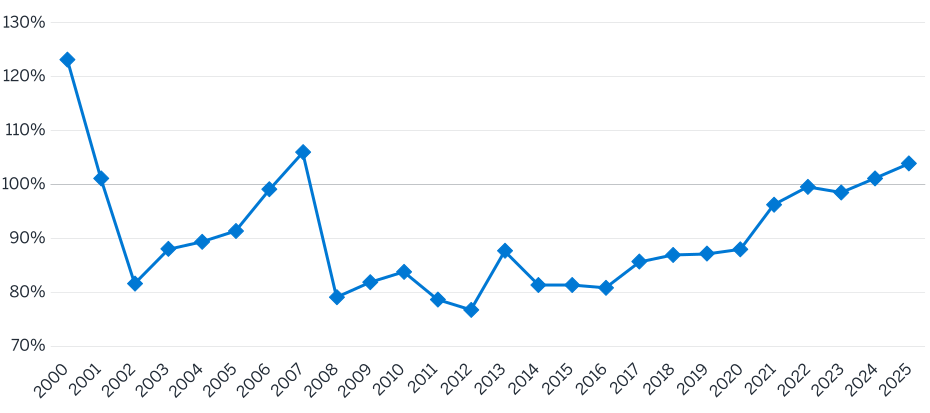
The 2.7% increase in the FY2025 funded ratio continued the trend of mostly improvements seen since 2016 and makes FY2025 the second fiscal year ending with funding surplus (along with FY2024) since FY2007, when the funded ratio was 106.0%.
Figure 4 breaks down the 2025 year-end funded ratio for all the plans in the study.
Figure 4: Distribution by funded ratio
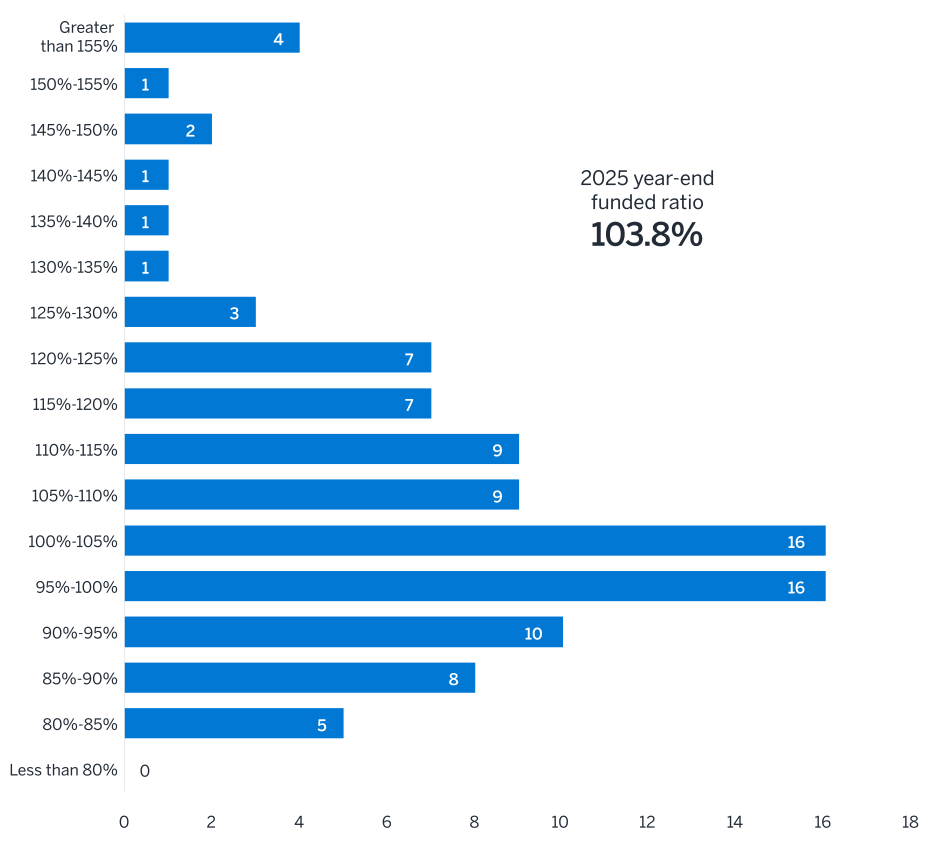
The number of companies with pension surpluses continues to increase, and for employers with frozen pension plans, a surplus position represents an opportunity for significant savings. By decreasing or ceasing contributions into a 401(k) plan and instead reopening the DB pension plan for employees, a company would be able to access the surplus funding to cover its IRS-mandated minimum retirement plan contributions. This would allow the company to provide a comparable or better retirement benefit, while requiring less cash expenditures. We estimate that about 41 of the companies in this study have frozen U.S. pension plans with excess assets. A desire to tap into the surpluses to see immediate cash savings may drive more companies to shift retirement benefit offerings and spending strategies from defined contribution (DC) to DB vehicles for their employer-provided retirement benefits. If all these companies made this switch, it could free up a combined $54.9 billion in savings that could go to shareholders or other business initiatives. Cash balance benefit designs seem to be the predominant plan design choice among plan sponsors that have taken up this initiative to reopen their DB plans. Alternatively, Congress may pass legislation that will allow plan sponsors to use pension surpluses for other purposes without terminating the plan. All in all, pension surpluses create many additional options for plan sponsors with respect to pension risk management.
Comparison to the Milliman 100 Pension Funding Index
Our PFS FY2025 funded ratio of 103.8% is lower than the level we projected in the January 2026 edition of the Milliman 100 Pension Funding Index (PFI). There are differences in methodology between the results reported in our annual study versus our projected monthly index; therefore, a match is not expected. The annual PFS funded ratio is aggregating plans with different fiscal year ending dates and different discount rates, whereas the monthly PFI makes normalizing adjustments to approximate the values of all 100 companies as of the same measurement date using the same average discount rate.
Return and liability expectations
Most pension funds in 2025 had investment returns above their assumed long-term expected returns. As a percentage of the market value of assets, we estimate the Milliman 100 companies’ plans returned 8.80% on average, which was higher than the average long-term assumed rate of return of 6.61%, resulting in a net $21.7 billion investment gain for FY2025.
Liabilities grew more than expected due, in part, to a decrease in discount rates in FY2025, with the average discount rate for plans in the study decreasing by 8 basis points from 5.39% to 5.31%. This caused an increase in the projected benefit obligations (PBOs) of the plans and, after accounting for the other liability changes (interest cost, service cost, benefit payments, settlements, etc.), the total FY2025 PBO of $1.25 trillion is higher than the $1.24 trillion at FY2024.
PRT programs, contributions, and pension expense
During FY2025, pension settlements or pension risk transfer (PRT) programs continued to be used as financial cost management tools by plan sponsors. The primary types of PRT used were annuity purchases and lump-sum windows, but these figures may also include other settlements, such as ongoing lump-sum payments from plans. Among the Milliman 100 pension plans, settlement payouts totaled an estimated $12.6 billion in FY2025, down from $23.4 billion in FY2024. PRT activities for the Milliman 100 companies have notably decreased as plans have moved into surplus funding territory, suggesting plan sponsors are considering other available risk management options.
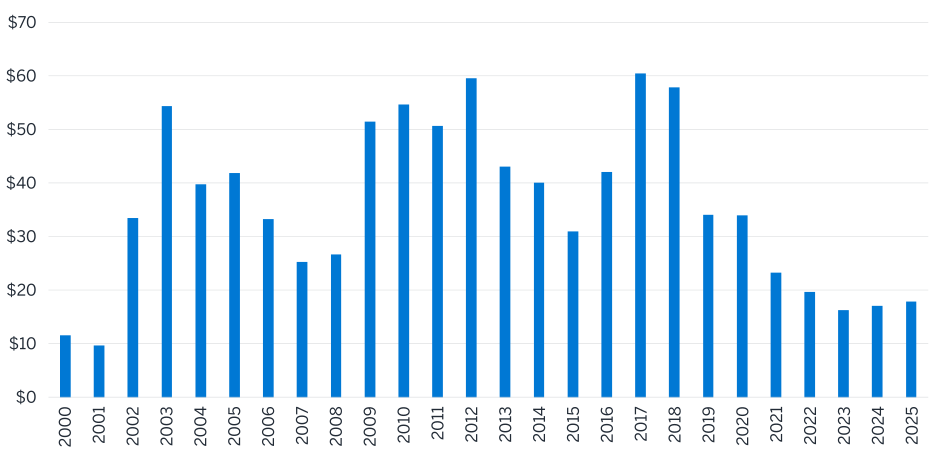
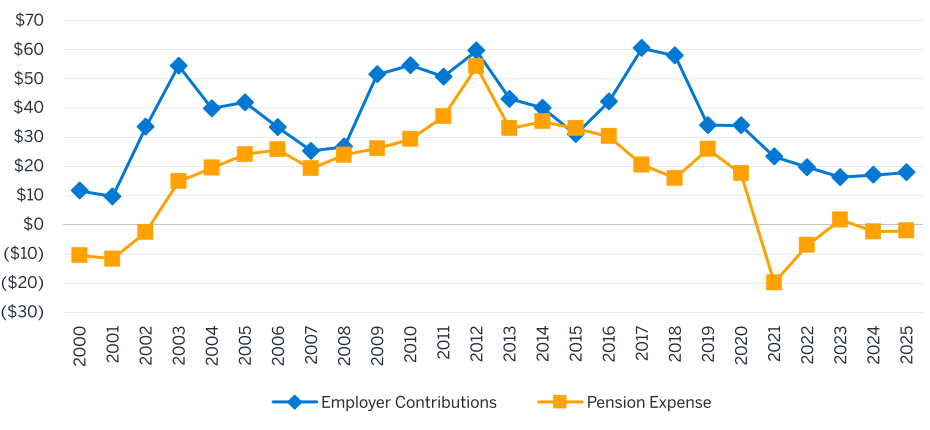
Total plan sponsor contributions of $17.9 billion in 2025 were higher than the 2024 contributions of $17.1 billion. These numbers pale in comparison to 2017 and 2018, when plan sponsor contributions hit record highs of $60.5 billion and $57.9 billion, respectively.
Pension expense (the charge to the income statement under Accounting Standards Codification Subtopic 715) remained an income statement credit (increase to company earnings) in 2025, with a pension income of $2.2 billion in FY2025, compared to the pension income of $2.4 billion in FY2024. This means FY2025 joins FY2024, FY2022, and FY2021 as the only years with pension income since FY2002.
The average expected investment return assumption increased slightly for FY2025, to 6.61% from 6.54% in FY2024. Plan year 2023 was the first time we’d seen this assumption increase in this study, and that trend continued in FY2024 and FY2025. Prior to 2023, there had been a decades-long trend of steady decreases in expected returns as interest rates declined and plans shifted their allocations more heavily to fixed income investments. After the large investment losses in 2022, however, higher yields on investments have allowed most plan sponsors to adjust upward their expected investment return assumption.
Other postemployment benefits
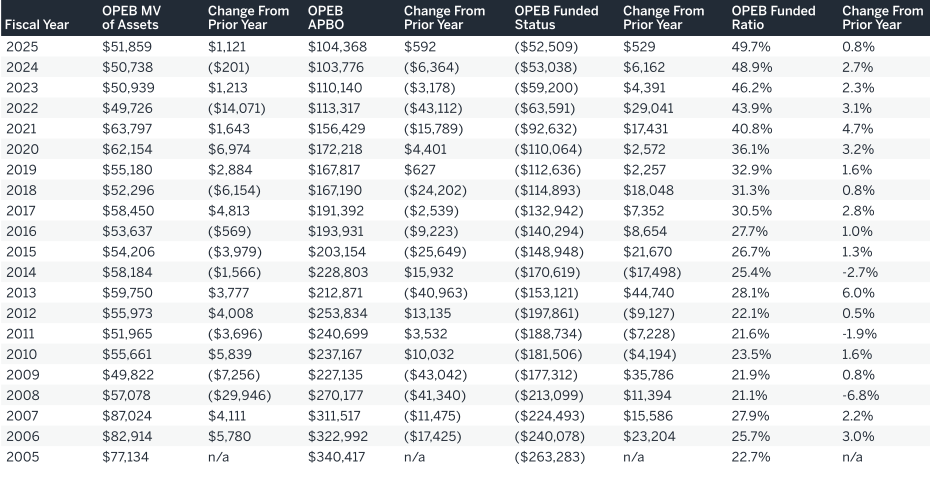
In addition to DB pension plans, the PFS tracks the actuarial obligations of postretirement healthcare benefits. Accumulated postretirement benefit obligations (APBOs) have been generally trending downward for the past couple of decades. In FY2025, there was a slight pause in the trend as APBOs increased to $104.4 billion from their FY2024 level of $103.8 billion.
Detailed comments and illustrations follow in the remainder of the 2026 PFS. Various tables with historical values can be found in the Appendix.
Equities outperformed fixed income investments and pension liabilities for the seventh year in a row
The weighted average investment return on pension assets for the 2025 fiscal year of the Milliman 100 companies was 8.80%, which was higher than their average expected rate of return of 6.61%. Seventy-five of the Milliman 100 companies exceeded their expected returns in FY2025.
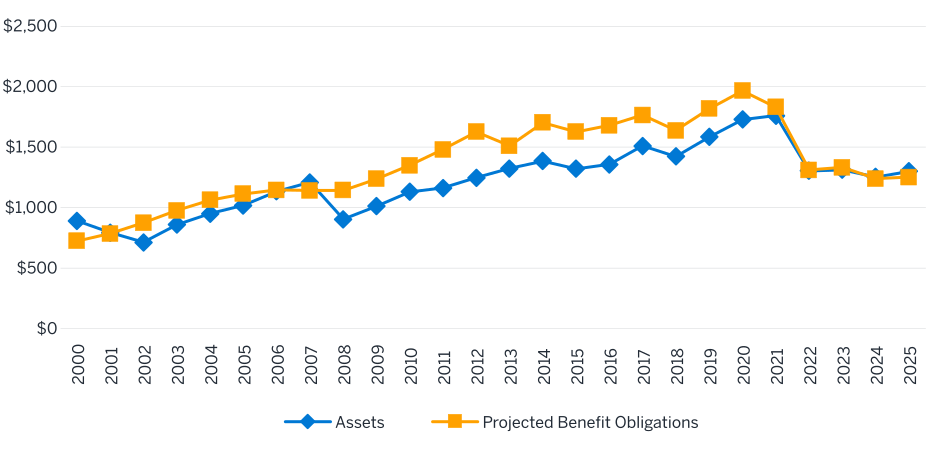
At the end of FY2025, total asset levels were $1.301 trillion. This is $460 billion below the high of $1.761 trillion at the end of FY2021, prior to the interest rate spike in 2022.
Figure 5 shows the investment return on plan assets for the Milliman 100 plans since 2003.
Figure 5: Investment return amounts on plan assets ($ billions)
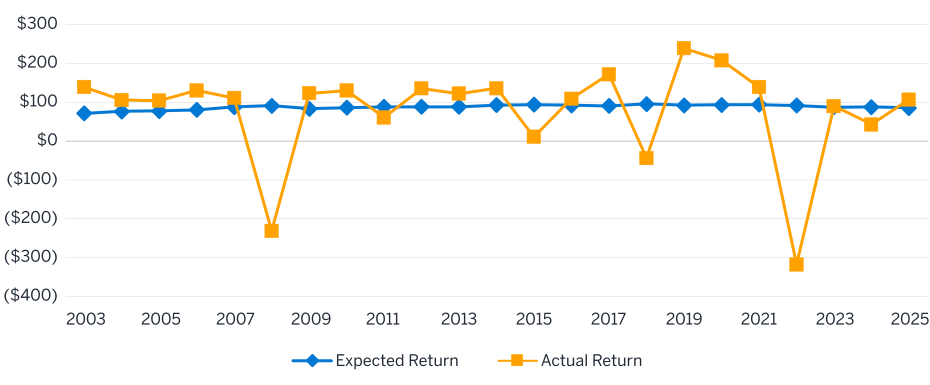
During FY2025, investment returns, contributions, and other adjustments were greater than annuity purchases, lump-sum settlements, and regular benefit payments, increasing the market value of assets by $47.4 billion.
The Milliman 100 companies’ estimated investment earnings for FY2025 were $106.9 billion, which, in aggregate, was above the expected earnings of $85.2 billion. For the five-year period ending in 2025, investment performance has averaged 1.21% compounded annually (only considering plans with calendar-year fiscal years). There have only been three years of negative investment returns over the past 20 years (2008, 2018, and 2022), contributing to an annualized investment return of 5.87% over that period (again, only considering plans with calendar-year fiscal years).
For calendar-year fiscal year plans, the weighted average U.S. discount rate decreased by 12 basis points during 2025. We estimate that their pension liabilities increased about 7% on an economic basis (due to the passage of time and changes to discount rates, ignoring benefit payments and accruals). Plans with significant allocations to fixed income as part of a liability-driven investment (LDI) strategy typically have allocations to long-duration, high-quality bonds. During 2025 these bonds saw asset returns of about 7%, closely tracking the increase in pension liabilities.
For the 88 companies sponsoring pension plans with calendar-year fiscal years, rates of return in 2025 ranged from 2.32% to 15.26%, with an average of 9.22%. Generally, plans with greater allocations to equities had higher investment returns in 2025. The 10 plans with equity allocations of at least 50% earned an average return of 10.13%, while the 21 plans with equity allocations below 15% earned an average return of 7.98%. Public Service Enterprise Group Inc., with a 69% allocation to equities, had the highest investment return of any of the calendar-year fiscal year companies in the study, at 15.26%.
In prior years, investment allocations made by plan sponsors showed a trend toward implementing LDI strategies. Generally, this involves shifting more assets into fixed income securities. This trend continued slightly in 2025. The fixed income allocations in the pension portfolios increased slightly, to an average of 52.7% at the end of FY2025, up from 52.2% at the end of FY2024. The percentages of pension fund assets allocated to equities, fixed income, and other investments were 24.1%, 52.7%, and 23.3%, respectively, at the end of FY2025, compared with 24.7%, 52.2%, and 23.1%, respectively, at the end of FY2024.
Plans with higher allocations to fixed income generally underperformed the other plans in FY2025 (for the 88 calendar-year plans, those with at least 50% allocated to fixed income earned an average return of 8.38%, compared with 9.22% overall).
Over the last five years, the plans with consistently high allocations to fixed income have underperformed the other plans but experienced lower funded ratio volatility. Among the 88 companies in the Milliman PFS with calendar-year fiscal years, 40 pension plans had fixed income allocations greater than 40.0% at the end of FY2020 and maintained an allocation above 40.0% through FY2025. Over this five-year period, these 40 plans experienced lower funded ratio volatility than the other 48 plans (an average funded ratio volatility of 4.42% versus 8.26% for the other 48 plans) but earned a lower five-year annualized rate of return (an average of 0.09% versus 2.58%). In fact, plans with at least 50% allocation to fixed income have underperformed other plans in each of the last five years, as shown in the following figure.
Figure 6: Fixed income allocation 50% or higher (calendar-year fiscal years only)
| Fixed Income Allocation 50% or Higher |
All Others | |||
| Fiscal Year |
Number of Companies |
Average Investment Return |
Number of Companies |
Average Investment Return |
| 2025 | 48 | 8.38% | 40 | 10.33% |
| 2024 | 50 | 1.91% | 38 | 4.32% |
| 2023 | 45 | 7.57% | 43 | 9.17% |
| 2022 | 40 | -20.14% | 48 | -18.03% |
| 2021 | 34 | 4.79% | 54 | 10.56% |
Since 2005, pension plan asset allocations to equities have decreased to about 24.1% from about 61.7%, while fixed income allocations have increased to about 52.7% from about 28.6%.
Overall, allocations to equities decreased during FY2025, resulting in an average allocation of 24.1%. One of the Milliman 100 companies had an increase to equity allocations of more than 10.0% in FY2025, while three companies decreased their equity allocations by more than 10.0% in FY2025.
Overall, allocations to fixed income increased in FY2025, resulting in an average allocation of 52.7%. One company had a decrease of more than 10.0% to their fixed income allocations, while four companies increased their fixed income allocations by more than 10.0% in FY2025.
Figure 7: Asset allocation over time
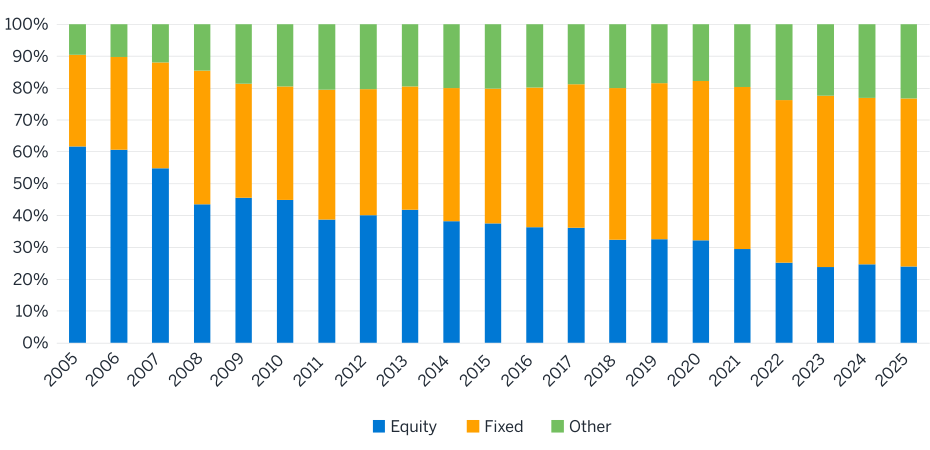
Other asset classes include real estate, private equity and debt, hedge funds, commodities, and cash equivalents. Specific details on how investments are allocated to the other categories are generally not available in the U.S. Securities and Exchange Commission (SEC) filings of the companies. Overall, allocations to other asset classes increased in FY2025, resulting in an average allocation of 23.3%. A total of two companies increased their allocations by 10.0% or more to other asset classes during FY2025, while one company decreased their allocation by 10.0% or more.
Funded status improved despite decrease in discount rate
Discount rates used to measure plan liabilities (specifically the PBO), determined by reference to high-quality corporate bonds, decreased during 2025, thereby increasing liabilities. The weighted average discount rate decreased to 5.31% at the end of FY2025 from 5.39% at the end of FY2024.
Figure 8: Sponsor-reported discount rates (2003–2025)
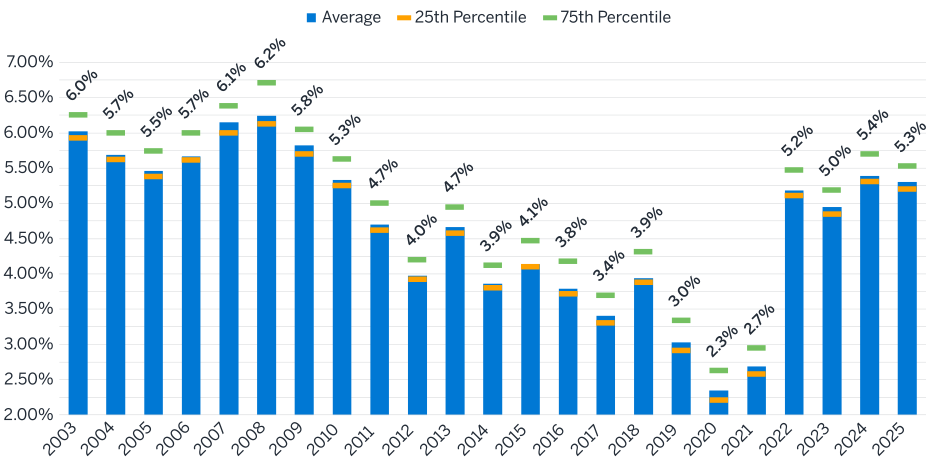
This drop in discount rates, along with the service cost and interest cost, was enough to offset settlements and benefit payments to result in the PBO increasing from $1.241 trillion at the end of FY2024 to $1.253 trillion at the end of FY2025. However, this increase in the PBO was more than offset by the increase in assets, so the funded ratio increased from 101.1% to 103.8% in FY2025. Likewise, the funded status improved in FY2025 from a $13.4 billion surplus to a $48.1 billion surplus. The combined effects of changes in assets and liabilities on the funded status are shown in Figure 9.
Figure 9: Reported change in pension surplus/(deficit) in FY2025 ($ billions)
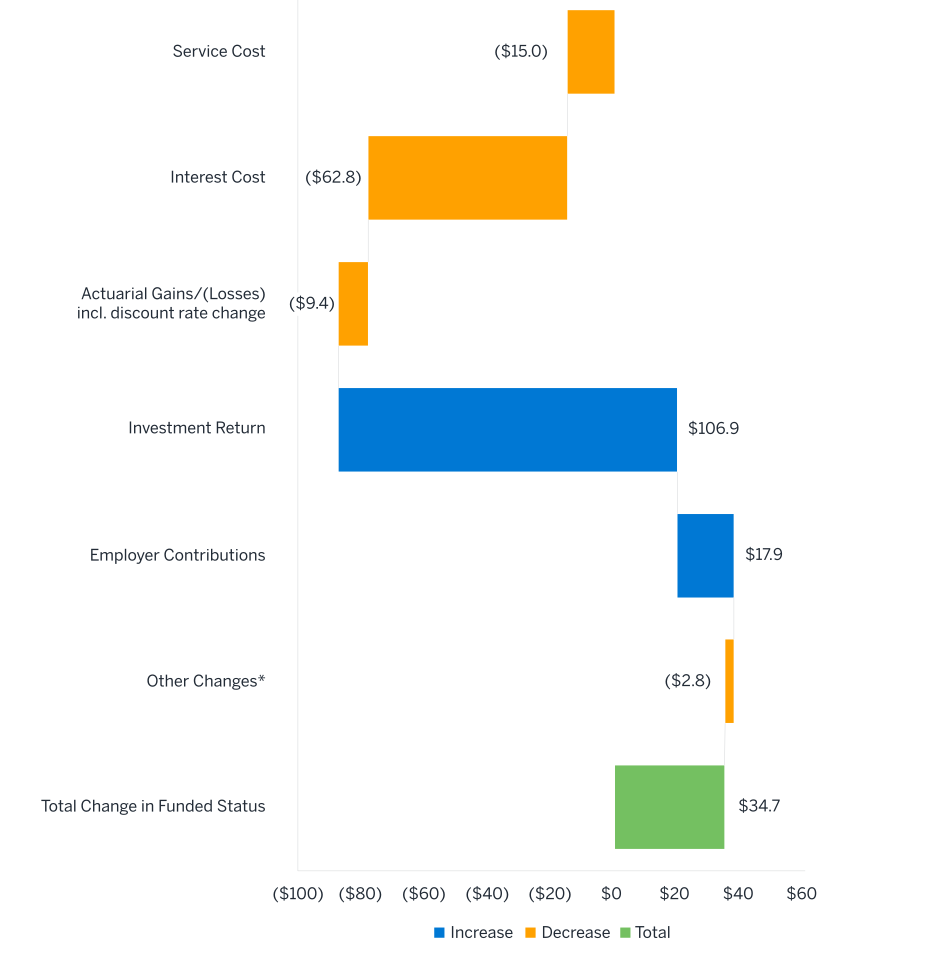
Sum of components may not match total change in funded status due to rounding.
* Other changes include changes in exchange rates used to convert the assets of non-U.S. plans from the local currency into U.S. dollars, net impact of settlements (impact on PBO less impact on assets), and any other changes in assets or liabilities not captured in the other categories in this figure.
Figure 10: Pension surplus/(deficit): Assets and PBO ($ billions)
PRT activities continue
Plan sponsors continued to execute PRT activities in FY2025 as a way of divesting pension obligations from their DB plans and corporate balance sheets. Large-scale pension buyout programs or lump-sum windows (with at least $1 billion in settled assets) were transacted for three of the Milliman 100 companies, as pension assets and liabilities were either transferred to insurance companies or paid out to participants. In addition, some companies that were in the Milliman 100 in prior years have fallen out of the top 100 due to settlement activity and, thus, are not included in the statistics reported in our study.
PRT market transactions decreased in 2025 compared with 2024 for the Milliman 100 companies. For the 2025 PFS, we estimate the dollar volume of PRT activities based on Form 10-K disclosures for the 2025 fiscal year to be $12.6 billion, which primarily consisted of annuity purchases and lump-sum windows. The estimated FY2025 dollar amount represents a decrease of $10.8 billion compared to the FY2024 reported dollar volume of $23.4 billion. This may be due to the higher funded ratios opening additional risk management options.
Plan contributions remain low
The aggregate FY2025 cash contributions by plan sponsors of the Milliman 100 companies were $17.9 billion, a slight increase of $0.8 billion from the $17.1 billion contributed in FY2024. This continues an upward trend in contribution amounts since 2023; however, contributions were still lower than any year from FY2002–FY2022.
Figure 11: Employer contributions by year ($ billions)
FY2025 net periodic pension cost
The FY2025 net periodic pension cost (i.e., pension expense) remained an income component, with total pension income of $2.2 billion for FY2025 compared to the $2.4 billion pension income for FY2024. This is well below the $54.2 billion expense peak level in FY2012. Forty-nine companies recorded FY2025 pension income (i.e., a credit to earnings). Pension income is certainly an attractive feature for a surplus-funded DB plan and another reason plan sponsors have had a renewed interest in reopening pensions.
Figure 12: Pension expense/(income) and contributions ($ billions)
Expected rates of return
Companies continued the recent reversal of a decades-long trend and again raised their expected rate of return assumptions on plan assets to an average of 6.61% for FY2025, as compared with 6.54% for FY2024. This is still well below the average expected rate of return assumption of 9.37% back in FY2000.
Figure 13: Sponsor-reported assumed rate of return on investments (2000–2025)
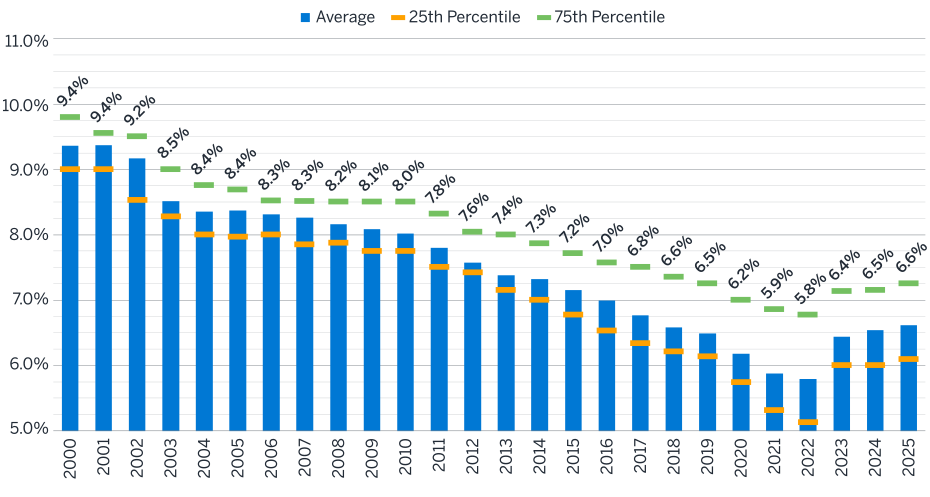
Eight of the Milliman 100 companies utilized an expected rate of return for FY2025 of at least 8.0%. This differs drastically from FY2000, in which all but two companies were above 8.0% (the highest was 10.90%).
Pension funding in 2026 and beyond
While the first quarter of 2026 was marked by market volatility, pension plans still managed to improve their surplus funding position. But with continued uncertainty about tariffs and the Federal Reserve’s next steps on interest rates, there is interest among plan sponsors to protect funded status gains. Our expectations for pension funding for the Milliman 100 companies in the coming year include:
- Plan sponsor contribution levels may be below 2025 levels given the solid plan asset performance in 2025.
- Pension income (credit to plan sponsor income statements) is expected to continue in FY2026, given the overall improvement in funded status during 2025. This would mark the first occurrence of a three-year pension income streak since the early years of our PFS.
- Plan sponsor expected return on assets assumptions for purposes of U.S. GAAP pension expense calculations may drop slightly due to the higher equity returns during 2025 coupled with the lower yields on fixed income at the end of 2025 compared to 2024.
- With higher funded ratios, we may see a split among plan sponsors, with some further de-risking their investments to lock in positive funded statuses, while others take advantage of the cushion surplus funding provides to seek higher returns. This could include an effort among plan sponsors to shorten their liability durations given that interest rates are still relatively high and that there’s uncertainty ahead.
- As the number of plans with surplus funding continues to grow, we could see further interest among plan sponsors in reopening their frozen DB plans for future benefit accruals. About 41 of the Milliman 100 companies have surplus funding of their frozen U.S. pension plans this year for a total surplus of $55 billion. These companies may stand to achieve balance sheet and cash savings by amending their retirement spending strategies and shifting resources from DC vehicles to those of DB pensions.
- PRT activities in 2026 are expected to continue, but they may stay at the lower levels seen in 2025 given the past PRT activity and improved funded status of the Milliman 100 companies.
- There could be more progress on the legislative or regulatory reform front, including the potential for plan sponsors to access surplus assets without terminating the plan or revisions to the Pension Benefit Guaranty Corporation (PBGC) variable rate premium calculations.
Appendix: Historical values
Historical values (All dollar amounts in millions; numbers may not add up correctly due to rounding.)
Figure 14: Funded status
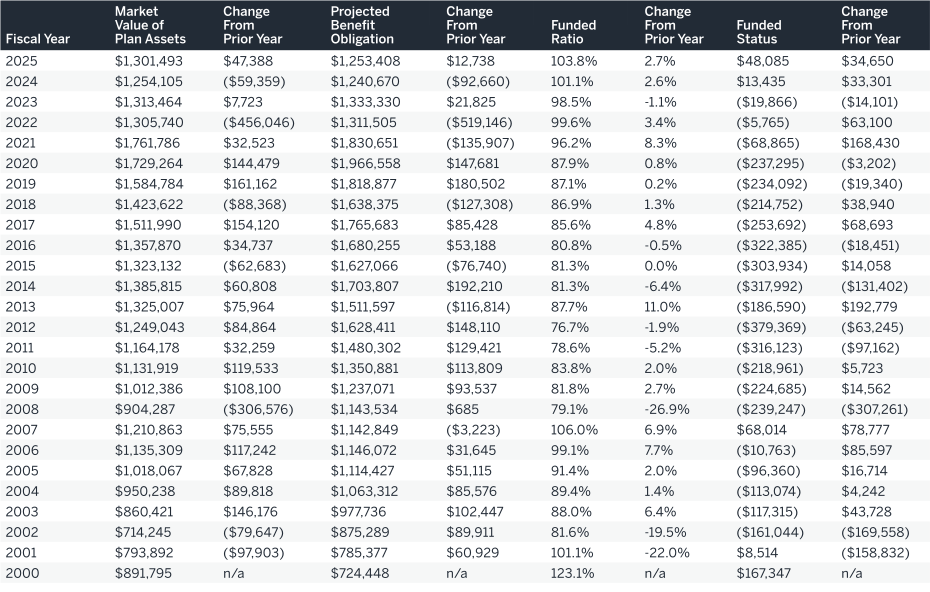
Figure 15: Return on assets
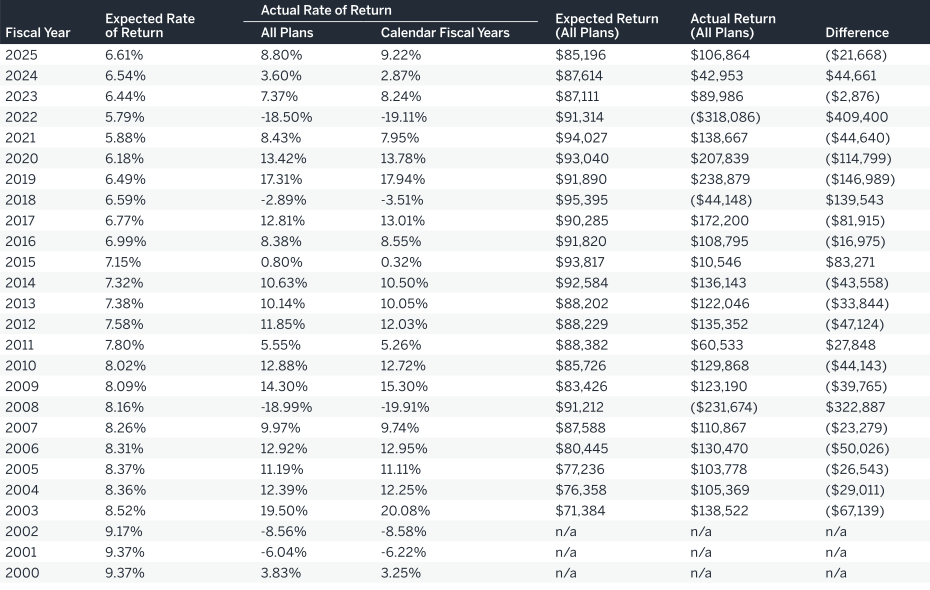
Figure 16: Pension cost
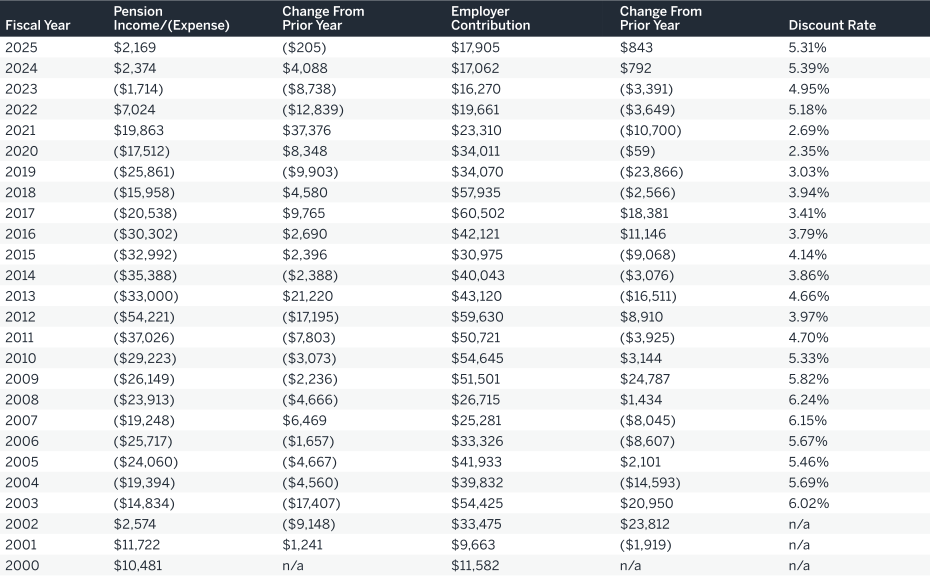
Figure 17: Asset allocations (by percentage)
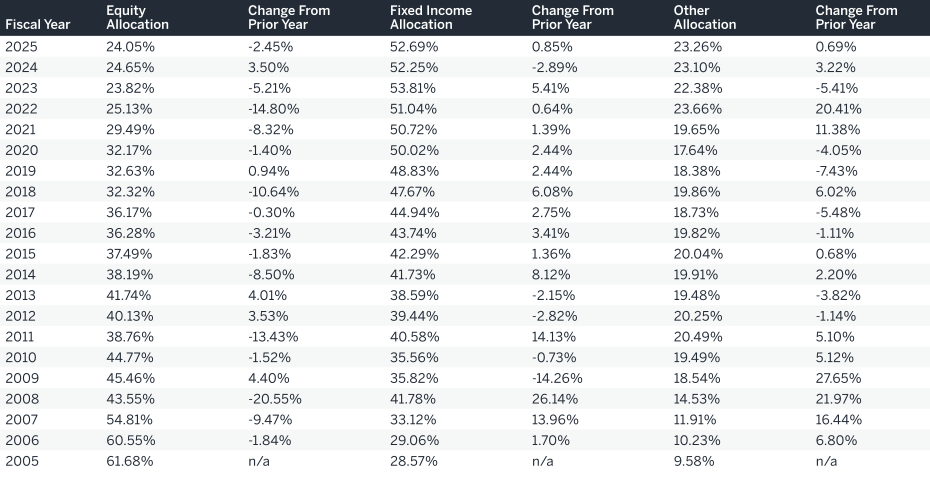
Figure 18: Pension plan information by business sector
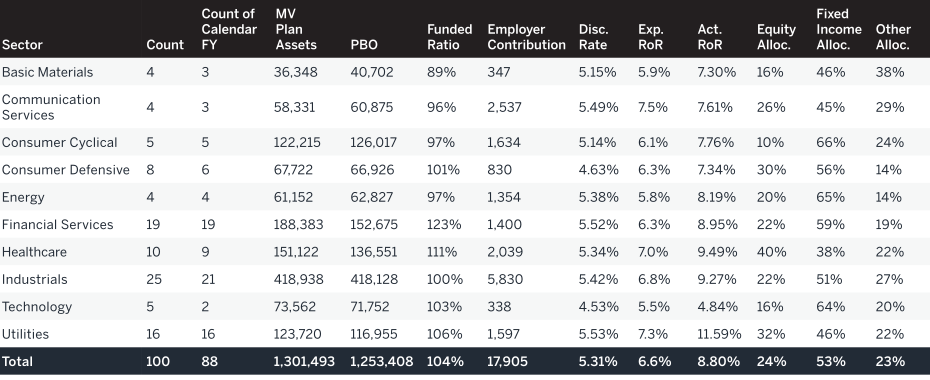
Figure 19: Other postemployment benefits (OPEB) funded status
About the study
The results of the 2026 Milliman Pension Funding Study (PFS) are based on the pension plan accounting information disclosed in the footnotes to the companies’ Form 10-K annual reports for the 2025 fiscal year and for previous fiscal years. These figures represent the GAAP accounting information that public companies are required to report under Financial Accounting Standards Board (FASB) Accounting Standards Codification Subtopics 715-20, 715-30, and 715-60. In addition to providing the financial information on the funded status of companies’ U.S. qualified pension plans, these footnotes also include figures for any nonqualified and foreign plans sponsored by the companies, both of which are often unfunded or subject to different funding standards than those for U.S. qualified pension plans. These foreign and nonqualified plans are included in our study, so the information, data, and footnotes do not represent the funded status of only the companies’ U.S. qualified pension plans under ERISA.
Twelve of the companies in the 2026 Milliman PFS had fiscal years other than the calendar year. The companies included in the study are affected by mergers, acquisitions, and other corporate transactions during FY2025. Figures quoted from 2025 and earlier years reflect the 2026 composition of Milliman 100 companies and may not necessarily match results published in the 2025 or any prior Milliman PFS. Generally, the group of Milliman 100 companies selected remains consistent from year to year. Privately held companies, mutual insurance companies, and U.S. subsidiaries of foreign parents were excluded from the study.
The results of the 2026 study will be used to update the Milliman 100 Pension Funding Index (PFI) as of December 31, 2025, the basis of which will be used for projections in 2026 and beyond. The Milliman 100 PFI is published monthly and reflects the effect of market returns and interest rate changes on pension funded status.
About the authors
Zorast Wadia, FSA, CFA, EA, MAAA, is a principal and consulting actuary in the New York office of Milliman. He has more than 25 years of experience in advising plan sponsors on their retirement programs. Zorast has expertise in the valuation of qualified and nonqualified plans. He also has expertise in the areas of pension plan compliance, design, and risk management.
Alan H. Perry, FSA, CFA, MAAA, is a principal and consulting actuary in the Philadelphia office of Milliman. He has more than 35 years of experience in advising plan sponsors on asset allocation and financial risk management. Alan specializes in the development of investment policies by performing asset-liability studies that focus on asset mix, liability-driven investing, and risk hedging.
Ryan J. Cook, FSA, EA, MAAA, is a consulting actuary in the Boise office of Milliman. He has more than 10 years of experience in advising plan sponsors on their retirement programs. Ryan has expertise in the valuation and projection of pension and OPEB plan liabilities. He also has expertise in the areas of asset-liability modeling, plan design, and risk management.
Acknowledgments
The authors thank the following Milliman colleagues for their assistance in compiling the figures and editing the report for the 2026 Milliman Pension Funding Study: Courtney Alemdar, Lena Amano, Ritika Arora, Chinmay Bhardwaj, Deepanshi Bhaskar, Adin Bookbinder, Francine Brazeau, Rebecca Driskill, Ryan Ellsworth, Yazur Garg, Vidit Jain, Nina Lantz, Ruchi Mittal, Greg Pappas, Esther Schewel, Adam St. John, Akshat Sukhija, Archit Taneja, Alex Tausz, and Kyle Wood.